36 Hours in Stavanger: Wooden Streets, Working History and a Fjord
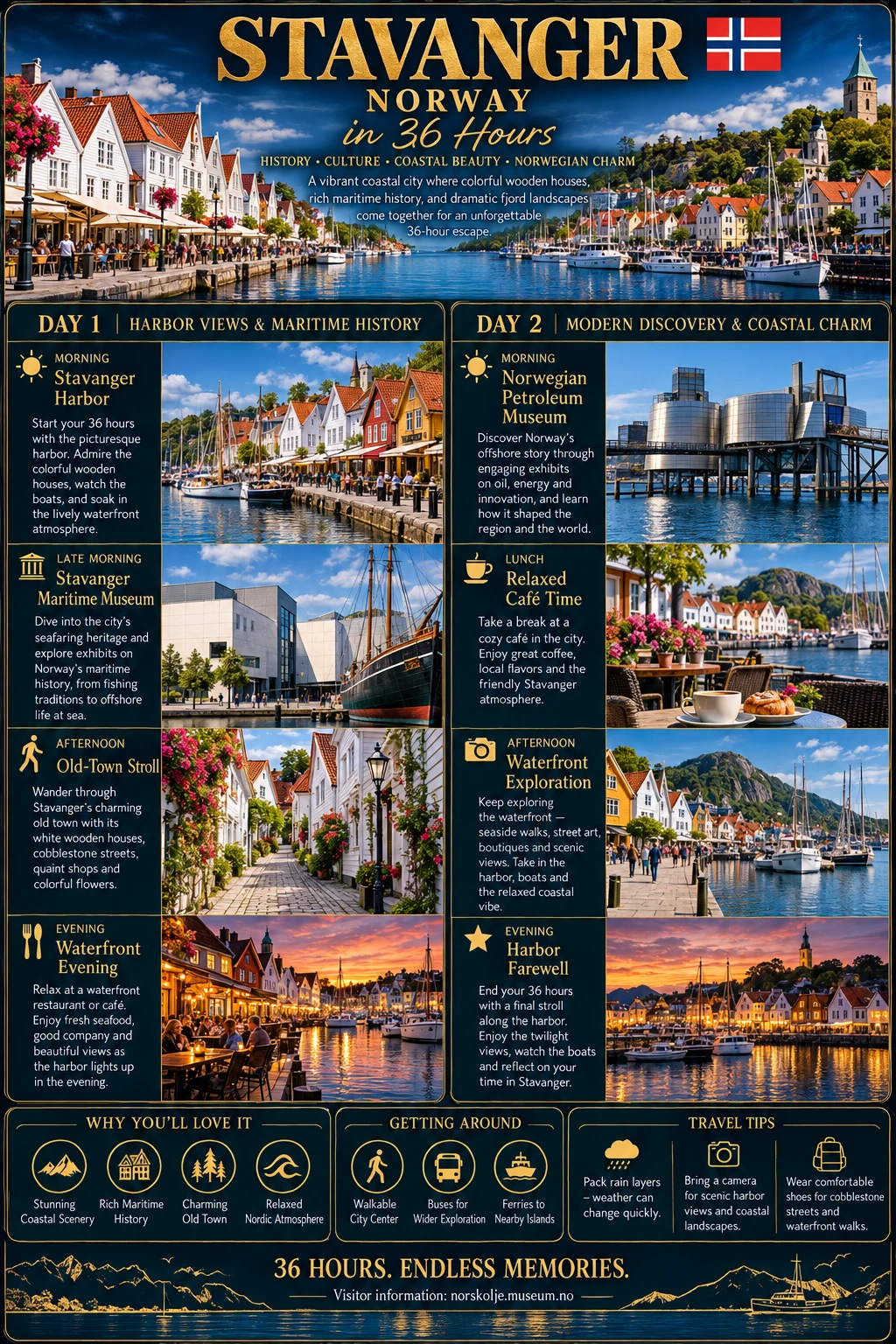
Verified: 16 October 2026. Stavanger’s harbour connects two very different industrial stories: the fish packed into tins in its earlier factories and the offshore petroleum industry that reshaped modern Norway. Between them are white wooden houses, brightly painted café streets and a food scene rooted in the sea and nearby farmland. A short fjord cruise can fit a 36-hour stay, provided the sailing actually operates on your date. This plan gives it a morning and keeps the alternative entirely in town. It does not squeeze a Preikestolen hike into a city afternoon.
Getting oriented
Stay within walking distance of Vågen, the central harbour. From the railway station, allow roughly 10–15 minutes to the waterfront; from an airport hotel or more distant neighbourhood, build in a separate transfer. The central sights are generally 5–20 minutes apart on foot, although slopes and cobbles can slow the pace. These are walking estimates, not accessible-route guarantees. Pack a waterproof jacket and layers even when the forecast looks friendly: wind on the water feels different from a sheltered street.
Day 1: From sardine tins to offshore platforms
9–11 a.m. | Breakfast and Gamle Stavanger
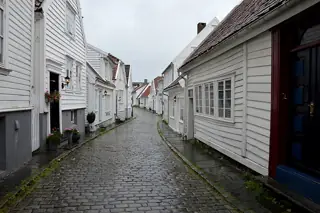
Begin near the harbour, then walk into Gamle Stavanger on its western side. The wooden houses are homes as well as a celebrated streetscape. Keep voices low, leave doorsteps clear and photograph from public streets. A slow loop lets you notice small gardens and the relationship between houses and waterfront without treating the neighbourhood as a film set.
Allow approximately an hour outdoors, with time for breakfast before or after. In rain, shorten the walk and wait for the museum to open rather than continuing uphill simply to complete a route. The city’s regional introduction provides useful background on the setting.
11 a.m.–1 p.m. | IDDIS and the machinery of everyday life
Visit IDDIS, which combines the Norwegian Canning Museum and Norwegian Printing Museum. The connection is satisfying: food production needed labels, packaging and a visual identity. Give the machinery and printed material time rather than moving through only for photographs. Children can look for a label that would persuade them to try what was inside the tin.
The operator’s practical page lists Monday closure and Tuesday–Sunday opening from 11 a.m. It puts the museum about ten minutes’ walk from the centre. If Day 1 is Monday, use the Petroleum Museum this morning and shift IDDIS to the following afternoon; do not assume the café’s separate schedule determines museum access. The museum’s background page explains the two collections and the former cannery building.
1–2:30 p.m. | Lunch by the harbour
Walk back to Vågen for fish soup or the day’s seafood. Ask what is actually available rather than expecting a particular species year-round. Visit Norway’s culinary guide connects local cooking with North Sea fish, Jæren agriculture and regional cheesemaking. A bowl of soup with bread can be a satisfying lunch without turning the meal into an expensive tasting menu. Vegetarian diners have options too; reserve specialist restaurants in advance rather than leaving a dietary requirement to chance.
2:30–4:30 p.m. | Norway’s petroleum story
Walk approximately 10–15 minutes to the Norwegian Petroleum Museum. Its displays offer another way to understand the harbour city and the difficult relationship between energy, prosperity and the environment. With children, select a manageable set of exhibits and ask staff about the activities appropriate to their age. Allow about two hours, adjusting your arrival to the seasonal closing time.
The museum’s own schedule has longer summer opening and shorter Monday–Saturday hours outside summer. It also lists several holiday closures, including 17 May, Good Friday, Easter Sunday and dates around Christmas and New Year. On a winter Monday–Saturday, begin this block earlier or shorten lunch so you are not arriving near closing.
5–9 p.m. | Colour, dinner and an early finish
After a hotel break, walk through Øvre Holmegate, commonly called Fargegata. Its colour is cheerful even under grey skies, and it works better as a place to sit than as a quick photographic checkpoint. Continue to dinner in the centre or toward Pedersgata, allowing 10–20 minutes depending on the address. Visit Norway describes the café street and dining choices. Book a sought-after table, but leave room for an ordinary bakery or casual meal if travelling with tired children.
Day 2: Choose the water or a second city morning
9 a.m.–2:30 p.m. | Lysefjord, if the timetable fits
Have breakfast and reach the correct Strandkaien departure point with the operator’s requested check-in margin. Rødne’s Lysefjord cruise takes approximately three to three and a half hours round trip. It sees the fjord and Preikestolen from the water; it does not land passengers for a hike.
The published autumn and winter calendar has limited operating days, rather than daily departures throughout the year. Choose the date in the booking calendar before planning the rest of the day. Weather can affect operations. Indoor seating, toilets and changing facilities make this a practical family outing, but seasickness and a child’s tolerance for several hours aboard still matter. Wheelchair places are limited: confirm the actual vessel and reserve assistance before buying.
Bring a snack and make lunch flexible. For an 11 a.m. departure, a proper meal after returning around 2–2:30 p.m. is more realistic than a noon restaurant reservation.
If there is no suitable sailing
Use the morning for the Petroleum Museum if not already visited, then walk around the cathedral exterior and nearby Breiavatnet. Check worship and visitor access before entering the cathedral. Move IDDIS here if Monday closure affected Day 1. This alternative is especially sensible during poor weather or with children who would find the cruise too long.
3–9 p.m. | Finish in town
Keep the last afternoon light: a café, a short waterfront walk and any missed museum, provided its closing time allows a worthwhile visit. Have an early dinner before collecting luggage. Avoid a last-minute drive out to a separate landscape attraction; the city and fjord have already supplied enough variety.
Three quieter pauses
- Breiavatnet: a short central waterside loop, useful when you want fresh air without a major excursion.
- The residential side lanes of Gamle Stavanger: often calmer than the main harbour frontage; respect private gardens.
- The waterfront beyond the busiest harbour restaurants: walk only as far as daylight and weather make comfortable, then return the same way.
Allow the cruise calendar, museum closures and weather to set the order. The reward is a city break with time to understand what you are seeing, rather than a race between departure boards.
Sources & travel planning
Research checked 2026-10-16. This date describes the guide’s research, not a guarantee of current conditions. Opening hours, prices, access, transport and travel advice can change. Recheck the official sources before booking and departure. Walking and journey times are planning estimates.
- stavanger.kommune.no ↗
- iddis.no ↗
- iddis.no ↗
- visitnorway.no ↗
- norskolje.museum.no ↗
- visitnorway.com ↗
- rodne.no ↗
Found a change? Contact Only36Hours about a correction.