36 Hours in Suwon: Royal Courtyards, Fortress Walls and a Slower Korea
Verified: 16 October 2026. Timings below are suggested planning allowances, not booked services.
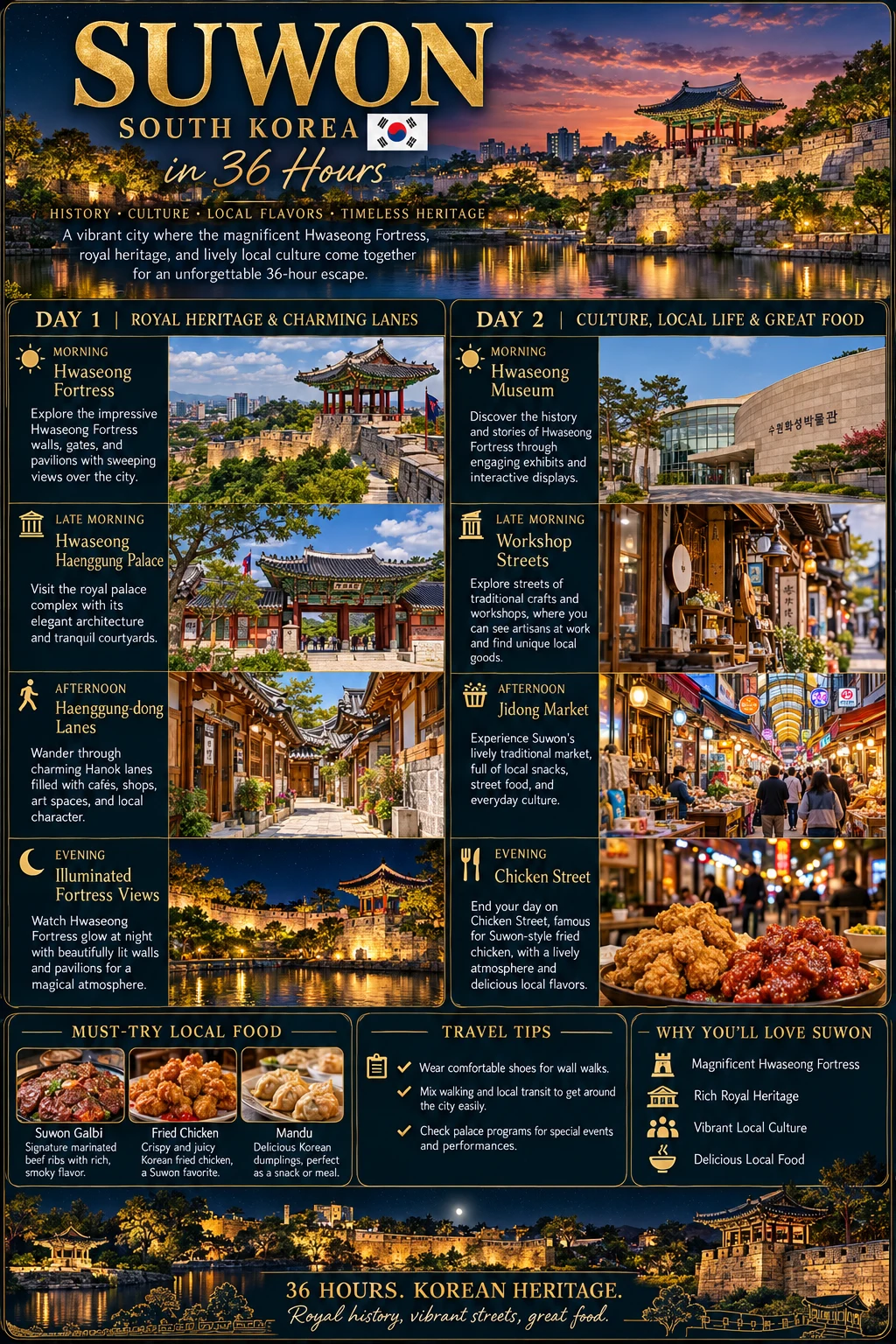
Suwon rewards an overnight stay. The fortress is woven into the modern city rather than isolated behind a single entrance: buses pass monumental gates, neighbours walk beneath the ramparts and cafés occupy the lanes between royal buildings and ordinary homes. Its greatest pleasure is seeing those contrasts without marching around every metre of wall. This itinerary concentrates on the historic centre, pairing the palace with two short walks and leaving room for a proper meal.
Before you arrive
Stay near Hwaseong Haenggung or in the surrounding centre if sightseeing is the priority. Suwon Station is a separate transport hub: allow approximately 20–35 minutes by local bus or taxi to the palace area, depending on traffic and waiting. From Seoul, compare the actual departure station and train service rather than assuming all journeys are identical. Keep your destination’s Korean name and address saved for drivers.
The Suwon Cultural Foundation’s current visitor information lists the fortress as freely accessible year-round, while palace entry has its own hours and ticket. The palace currently opens at 9 a.m., with admission finishing an hour before its 6 p.m. closure. Recheck event notices before travelling. Older English pages contain different last-entry details.
Day 1
9–11 a.m. | A palace built around royal journeys
Start at Hwaseong Haenggung, the temporary palace associated with King Jeongjo’s visits to Suwon. Walk through successive courtyards rather than treating the complex as one photographic backdrop. Notice how gates control the view and how the scale changes between ceremonial and more intimate spaces. Allow around two hours, including a pause and time to read interpretation.
The official palace information explains its royal role. For children, concentrate on a few courtyards and a simple challenge: find different roof shapes, painted beams and thresholds. A shorter attentive visit is better than turning every room into compulsory reading. Expect uneven surfaces and changes of level; ask staff for the easiest accessible route.
11 a.m.–1:30 p.m. | Neighbourhood lanes and lunch
Explore the lanes around the palace at an unhurried pace. Allow 30–45 minutes of wandering, then choose a café or lunch stop rather than queuing at the first heavily photographed doorway. Small businesses keep individual opening days, so this is deliberately a neighbourhood walk rather than a list of guaranteed shop interiors.
Save your larger barbecue meal for evening if you prefer a light lunch. Noodles, rice dishes or dumplings make practical alternatives, but ask about broth and fillings: a vegetable-looking dish may contain meat or seafood. Families should order a mild dish explicitly rather than assuming that removing visible chilli makes the whole meal mild.
2–4:30 p.m. | Water, walls and a manageable northern walk
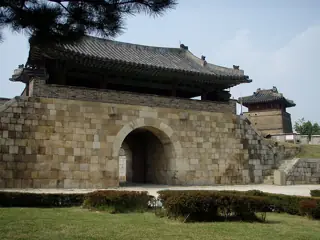
Walk approximately 20–30 minutes toward Hwahongmun, allowing longer for stops. The official monument description explains the seven-arched watergate over Suwoncheon. Look at the relationship between the stream, bridge and pavilion before continuing toward nearby Banghwasuryujeong and Yongyeon pond.
Choose a short section toward Janganmun if energy and conditions permit, then descend to ordinary streets for the return. The full fortress circuit is roughly 5.7 kilometres, according to the foundation’s route guide; completing it is unnecessary for understanding the site. Wall stairs and exposed sections are unsuitable for a continuous stroller route. In rain, ice or extreme heat, stay on the lower paths and use a taxi back.
5–9 p.m. | Galbi and an optional illuminated palace
After a hotel break, try Suwon-style galbi: generous beef ribs are a local speciality highlighted by Korea’s tourism organisation. Check whether the menu prices meat by portion and whether a minimum order applies. Keep children away from tabletop grills and ask staff for help cooking unfamiliar cuts.
If your dates qualify, replace a long dinner with a palace night visit. The published 2026 season runs 1 May–1 November on Fridays–Sundays and public holidays, not every evening. The foundation lists 6–9:30 p.m., last admission 9 p.m. Outside that schedule, enjoy the surrounding lit streets without expecting palace entry.
Day 2
9:30–11 a.m. | Understand the engineering
Visit Suwon Hwaseong Museum, a short walk east of the palace. Its displays help connect yesterday’s gates and walls to the planning and construction of the fortress. The foundation’s museum listing describes historical material and children’s educational spaces. Do not assume a scheduled workshop is available without booking.
Regular closure is Monday, with holiday-related adjustments. If closed, use the morning for the western gate walk below and make yesterday’s palace visit the main indoor attraction. Check current museum notices rather than relying on older combined-ticket leaflets that mention only the first Monday.
11:30 a.m.–3 p.m. | The western gate at street level
Have an early lunch, then walk toward Hwaseomun and the neighbouring park, allowing roughly 20–30 minutes from the museum area. Compare this defensive gateway with the watergate instead of climbing another long wall section. Nearby Hwaseo Sarangchae offers a smaller-scale cultural setting in traditional-style buildings; check current exhibitions and remember its listed Monday closure. Leave time for a café and luggage collection.
3–9 p.m. | Choose your own final stretch
Return to the stream or revisit a favourite neighbourhood, then have an early dinner before departure. Travellers with a later train can extend the café break; there is no need to add another district simply to fill the evening. Allow a generous station transfer and check which station your ticket names.
Three quieter places worth your time
- Yongyeon’s pond-side paths: pause away from the busiest pavilion photograph spots, especially on weekdays.
- Hwaseo Sarangchae: a modest cultural stop when open, with the western gate nearby.
- Suwoncheon away from Hwahongmun: follow a short lower-path stretch only where open and conditions are safe; avoid flood-prone paths during heavy rain.
Practical rhythm
Spring and autumn suit walking, but festivals can increase crowds. Summer calls for shade, water and a genuine midday break; winter can mean slippery stairs. Carry a light layer for evening. The best family adjustment is to keep one substantial attraction per half-day and use street-level routes between them. This plan deliberately leaves archery, balloon rides and other scheduled experiences optional because weather, availability and participation restrictions need individual checking.
Sources & travel planning
Research checked 2026-10-16. This date describes the guide’s research, not a guarantee of current conditions. Opening hours, prices, access, transport and travel advice can change. Recheck the official sources before booking and departure. Walking and journey times are planning estimates.
- swcf.or.kr ↗
- visitsuwon.or.kr ↗
- visitsuwon.or.kr ↗
- swcf.or.kr ↗
- english.visitkorea.or.kr ↗
- swcf.or.kr ↗
- swcf.or.kr ↗
Found a change? Contact Only36Hours about a correction.