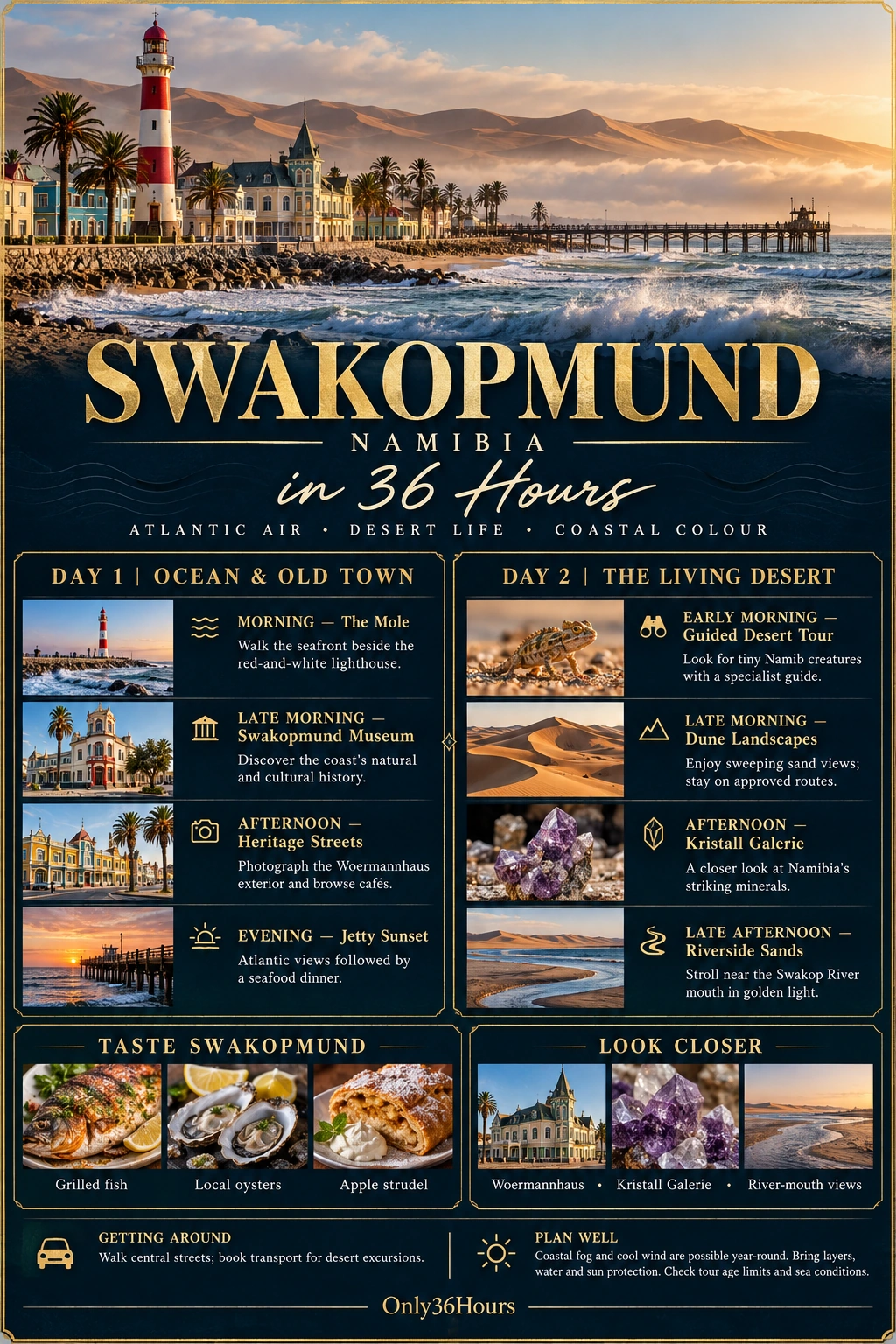
36 Hours in Swakopmund: Atlantic Air and the Small Wonders of the Namib
Verified: 16 October 2026. Transfer and walking times are planning estimates; reconfirm tour details directly.
Swakopmund is most interesting where apparently opposite worlds meet: cold Atlantic air and warm sand, a busy Namibian town and fragile desert habitat, attractive old buildings and a colonial history that deserves more than admiration of façades. Spend your first day understanding the town and your second learning to notice the desert’s smaller creatures. This is a better short visit than trying to combine every dune activity, boat trip and distant viewpoint.
Before you arrive
Choose accommodation in or near the central area if you want to walk between the museum, cafés and coast. A transfer from Walvis Bay airport generally needs around 40–60 minutes, depending on the pickup and destination. Confirm the airport named on your ticket; Swakopmund and Walvis Bay are not interchangeable. Arrange a reputable transfer rather than relying on finding an appropriate vehicle after arrival.
Book the desert excursion before committing to the rest of Day 2. Ask about pickup, child restraints, mobility needs, cancellation terms and payment method. Carry a warm outer layer as well as sunscreen: a coastal morning can feel markedly colder than the word “desert” suggests. Do not leave luggage or cameras visible in a parked vehicle.
Day 1
9–10 a.m. | Breakfast and the seafront
Start with a relaxed breakfast, then walk toward the lighthouse and Mole area. Give yourself 30–45 minutes to watch the sea and get oriented. This is a coastal stroll, not an automatic swimming recommendation: wind, water temperature, waves and local warnings should determine any water activity. Keep children close to edges and avoid climbing barriers for photographs.
The compact central area is useful for a gentle first morning after a long journey. Save the museum until its published opening rather than arriving at a locked entrance.
10 a.m.–noon | Namibia in objects and landscapes
Allow around 90 minutes at Swakopmund Museum. Its operator, the Scientific Society Swakopmund, lists daily opening from 10 a.m. to 5 p.m. and describes collections covering Namibian history, culture and natural science. Choose a mixture of exhibits instead of reading every label: landscapes and wildlife, everyday objects, then the history of settlement and transport.
The society’s background page explains that the museum occupies a former imperial customs warehouse below the lighthouse. That setting is a useful prompt to ask whose histories are represented and whose perspectives need further context. Colonial-era architecture should not be treated as the whole story of the town. Families can let each child choose one object to discuss over lunch.
Noon–2 p.m. | Lunch and a real pause
Choose lunch in the centre, then return to your hotel if needed. Fish, seafood, bakery food and German-influenced dishes all appear in Swakopmund’s dining landscape; the Namibia Tourism Board’s food overview provides background, though individual restaurant listings are old enough to require fresh checks. Ask what fish is available that day and check prices before ordering shellfish by weight.
A bakery lunch is an easy family option. For allergies, ask about ingredients and preparation rather than relying on a familiar-looking name. Reserve a dinner table directly if a particular waterfront restaurant matters to you.
2–4:30 p.m. | Architecture with context
Take a short walk through the central streets toward Woermannhaus, allowing 20–30 minutes plus stops. The municipality’s town profile identifies the building’s heritage significance and later library-and-arts use. Treat it as an exterior stop unless you have confirmed current interior access; this plan does not depend on climbing its tower.
On a weekday, history enthusiasts can instead walk or take a short taxi ride to the Sam Cohen Library and Archive. Its operator page describes historical photographs, maps, newspapers and books. Contact staff if you want particular archival material; a reading room is not a drop-in exhibition with every collection on display. The published weekday schedule has a 1–2 p.m. lunch break. On weekends, keep the afternoon outdoors or extend the museum visit.
5–9 p.m. | Sea air and dinner
Return to the coast while there is daylight, then have an early dinner. Walk only as far along the jetty or promenade as conditions and current access allow. If it is windy, choose a sheltered table rather than insisting on a sunset outing. After dark, use a hotel-recommended taxi when the route is quiet or unfamiliar.
Day 2
8 a.m.–1 p.m. | Read the desert’s small signs
Have breakfast before a prebooked living-desert excursion. Living Desert Adventures, also listed by the national tourism board, publishes morning pickups in Swakopmund and a return around noon–1 p.m. Its tour focuses on the dune belt between Swakopmund and Walvis Bay, with stops to discuss tracks, plants, geology and specially adapted animals.
Geckos, lizards, beetles and other small creatures are possibilities, not guaranteed sightings. Let guides manage the encounter and do not pursue, collect or independently handle wildlife. Ask prospective operators about their conservation practices. Wear practical shoes, a hat and layers; bring your own necessary medication and tell the operator about relevant mobility limitations before paying.
This is a four-to-five-hour outing, not a quick photo drive. The operator accepts children but parents should confirm suitability for their child’s age and the vehicle’s restraints. There are no conventional toilets on the tour, an important consideration for young children and anyone with access needs. Its published cancellation terms are strict within 48 hours, and payment arrangements should be checked in advance.
1–4 p.m. | Lunch without another departure deadline
Return to town for lunch and a rest. Keep the afternoon intentionally light after the vehicle travel, sun and sand. If wind or operational conditions cancel the excursion, move the museum here and ask your accommodation about a suitable local alternative; do not replace it with an improvised self-drive into the dunes.
4–9 p.m. | A final walk, then a comfortable departure
Choose a short coastal walk or café stop, followed by dinner if staying into the evening. If leaving by road, depart early enough to travel outside towns in daylight. Official travel advice cautions against night driving outside towns because of wildlife and livestock and highlights the risks of gravel roads. A late dinner is not worth turning a long onward drive into an overnight one.
Three quieter worthwhile stops
- Sam Cohen Library and Archive: a weekday choice for genuinely interested readers, with advance enquiries for material.
- Otavi Bahnhof exterior: the society identifies this heritage railway building beside the library; check before entering any grounds or buildings.
- The promenade away from the central jetty: a short daylight walk offers space without adding another attraction or excursion.
Keep the visit manageable
For 36 hours, choose the living-desert tour or a different major excursion, rather than stacking a dolphin cruise and Sandwich Harbour drive onto the same day. Adventure activities need separate insurance and safety checks. Fog or wind may alter the mood of a visit; bring flexibility, and let the museum and cafés serve as worthwhile destinations rather than disappointing backups.
Sources & travel planning
Research checked 2026-10-16. This date describes the guide’s research, not a guarantee of current conditions. Opening hours, prices, access, transport and travel advice can change. Recheck the official sources before booking and departure. Walking and journey times are planning estimates.
- sciswk.com ↗
- sciswk.com ↗
- visitnamibia.com.na ↗
- swakopmun.com ↗
- sciswk.com ↗
- livingdesertnamibia.com ↗
- visitnamibia.com.na ↗
- gov.uk ↗
Found a change? Contact Only36Hours about a correction.