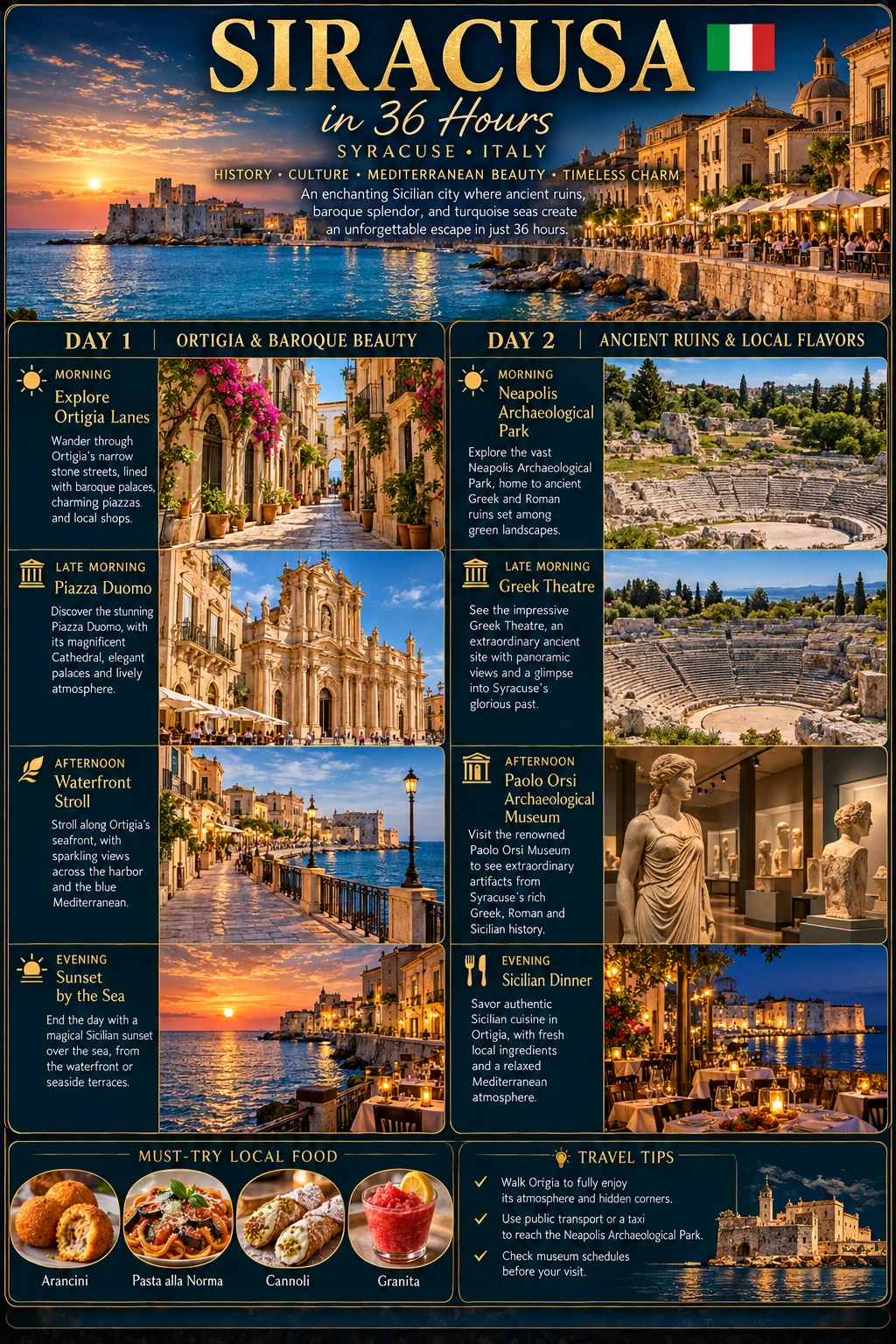
36 Hours in Syracuse: Ancient Stages and Ortigia’s Sea-Lit Streets
Verified: 16 October 2026. Walking and transfer times are approximate; check the current monthly attraction calendars.
Syracuse, or Siracusa, offers two distinct experiences close together: the monumental remains of an ancient city on the mainland and the intimate streets of Ortigia, its island heart. A short stay works best when those experiences get separate stretches of time. Start with the archaeological park before the day becomes hot, then settle into the slower rhythm of sea walls, church interiors and meals. There is no need to squeeze Noto or Pantalica into the same 36 hours.
Getting the geography right
Ortigia is a rewarding base for evenings, while mainland accommodation can make parking and station access simpler. From the railway station, allow approximately 20–30 minutes on foot to Ortigia’s entrance and longer to a hotel at its southern end. A taxi is sensible with heavy luggage or in summer heat. Neapolis is outside the island: budget roughly 15–25 minutes by taxi from Ortigia, or 40–55 minutes on foot, depending on your starting point.
Drivers should arrange parking before arrival. Ortigia has controlled traffic access, with municipal ZTL rules updated in 2026. Ask your accommodation about any valid permit process rather than following navigation into restricted streets. For this route, walking plus one or two taxis is usually easier than keeping a car beside you.
Day 1
9–11:30 a.m. | Neapolis before the hottest hours
Begin at the archaeological park with water, a hat and sturdy shoes. Give the Greek theatre and surrounding landscape proper time, then follow the currently open visitor route to the quarry area and other accessible monuments. The regional park’s official site provides maps and site information. Paths, steps and exposed ground make this more tiring than a museum visit of the same length.
Choose a two-hour circuit rather than assuming every section must be covered. With children, concentrate on the scale of the theatre and how people used the landscape; avoid climbing on protected remains. Ask the operator about accessible routes and temporary restrictions before buying if mobility is a concern. Performances and conservation work can affect what is visible.
The current hours page changes by month, with earlier closing after the autumn clock change. At verification, Castello Eurialo was explicitly closed, so it is not a fallback attraction in this itinerary.
Noon–2:30 p.m. | Lunch and a return to the island
Travel back to Ortigia, allowing 20–30 minutes for pickup and the drive. Have lunch near your hotel and take a genuine break. An arancino makes a convenient smaller meal; ask about the filling rather than assuming all rice balls contain the same ingredients. Sicily’s official food guide describes varieties ranging from meat ragù to aubergine and cheese.
A longer seated lunch works equally well. Avoid promising a particular fish or market stall: catches, opening days and menus vary. In warm weather, buy only what you can eat or refrigerate promptly.
3–5 p.m. | Piazza Duomo and the cathedral’s older bones
Walk to Piazza Duomo, then enter the cathedral when tourist access permits. The regional tourism description of Ortigia highlights the ancient Doric temple columns incorporated into the building. Look for those earlier structural forms rather than seeing only the later façade. Allow 45–60 minutes for the square and interior, with time to sit nearby.
This is an active place of worship. Services, weddings and religious events can interrupt sightseeing; dress appropriately and follow the entrance staff’s instructions. If closed, explore the surrounding lanes and return later rather than waiting indefinitely. Keep the afternoon flexible enough for that swap.
5–9 p.m. | Arethusa and an unhurried dinner
Continue toward Fonte Aretusa, then along the waterfront. The spring is linked to the myth of Arethusa; it makes a small, atmospheric stop rather than a long attraction. Allow an hour for the wider stroll and photographs, then choose dinner away from the busiest passage if you want a quieter table.
Try a seasonal vegetable dish, pasta or simply prepared fish, followed by a cannolo or granita if available. Check allergens carefully: nuts, dairy and seafood appear in many local preparations. Reserve directly for a restaurant you particularly want, especially on summer weekends. Finish with a short walk back rather than another taxi journey across town.
Day 2
9–11 a.m. | The island’s fortified tip
Walk south to Castello Maniace, allowing roughly 15–25 minutes from central Ortigia. Visit in the morning after confirming the day’s opening. The regional cultural-site listing publishes variable schedules, including shorter Sunday and Monday sessions; do not assume an afternoon visit will work. Event closures also occur.
Allow around an hour inside, then time for the seaward setting. If the castle is unavailable, keep the southern-island walk and extend breakfast or lunch. Avoid replacing it with several distant sights. Wind can make exposed waterfront areas uncomfortable, and barriers must be respected.
11 a.m.–2 p.m. | Giudecca lanes and lunch
Return through the quieter lanes of the Giudecca area on the island’s eastern side. This is a residential neighbourhood as well as a visitor destination: keep voices low and avoid photographing into homes. Wander for 30–45 minutes, then choose lunch. Any underground bath, museum or guided interior requires its own booking and access check; the walk does not depend on one being open.
2–9 p.m. | Choose rest or deeper archaeology
For a relaxed finish, take a hotel break, revisit the eastern waterfront and have an early dinner before departure. If archaeology is your priority, replace that afternoon with the Paolo Orsi Museum on a Tuesday–Saturday, allowing about two hours plus mainland transfers. It should replace leisure time, not be added before an imminent train.
The operator lists Paolo Orsi closed Mondays and with a short holiday schedule; Sundays and public holidays require a morning visit instead. For a Sunday museum visit, swap it with this morning’s castle, checking whether the castle can move to Day 1. Do not rely on an afternoon museum entry. The numismatic collection has a narrower visiting window than the general museum.
Three quieter worthwhile places
- Giudecca’s residential lanes, away from restaurant queues and with respect for residents.
- Ortigia’s eastern seafront, for a brief daylight walk when wind and waves permit.
- The southern streets approaching Maniace, best enjoyed before the busiest part of the day rather than as a rushed castle approach.
Seasonal and family considerations
Summer heat makes the morning archaeology slot and midday rest essential. Spring theatre performances are separately ticketed events, not an automatic part of park admission; check the current season. Winter brings shorter attraction hours and possible rough weather. A compact stroller is helpful on ordinary streets but less convenient on uneven archaeological paths. Keep a carrier option if appropriate, and let an ice-cream stop replace one more interior when children have had enough.
Sources & travel planning
Research checked 2026-10-16. This date describes the guide’s research, not a guarantee of current conditions. Opening hours, prices, access, transport and travel advice can change. Recheck the official sources before booking and departure. Walking and journey times are planning estimates.
- static-www.comune.siracusa.it ↗
- parchiarcheologici.regione.sicilia.it ↗
- parchiarcheologici.regione.sicilia.it ↗
- visitsicily.info ↗
- visitsicily.info ↗
- www2.regione.sicilia.it ↗
Found a change? Contact Only36Hours about a correction.