36 Hours in Takamatsu: Garden Views, Sea Moats and Sanuki Udon
Verified: 16 October 2026. Times are suggested allowances; check current transport and attraction notices.
Takamatsu is more than a ferry departure point. Its pleasures include a garden that changes with every turn, a castle moat linked to the sea and noodle shops where the most satisfying order can be the simplest. This itinerary stays on Shikoku, giving the city and nearby Shikokumura room to breathe. Save Naoshima or another art island for a separate day with its own ferry and museum reservations.
Start with a useful base
Stay around Takamatsu Station and the port for onward travel, or near the central shopping arcades for evening dining. JR and Kotoden are separate railway systems: check the station and ticket required rather than assuming one pass covers everything. The station-to-garden journey needs roughly 20–35 minutes including a bus or train wait and the final walk. Taxis are useful for families but still need traffic allowance.
The prefectural tourism guide lists several Ritsurin access options, including a short walk from JR Ritsurin-Koen-Kitaguchi and a longer walk from Kotoden Ritsurin-Koen. They are not the same station. Keep a current map available and avoid choosing purely by a similar-looking name.
Day 1
9–11:30 a.m. | Ritsurin without rushing
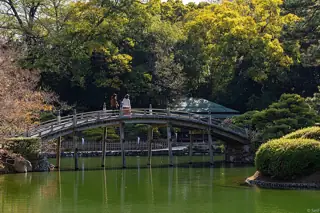
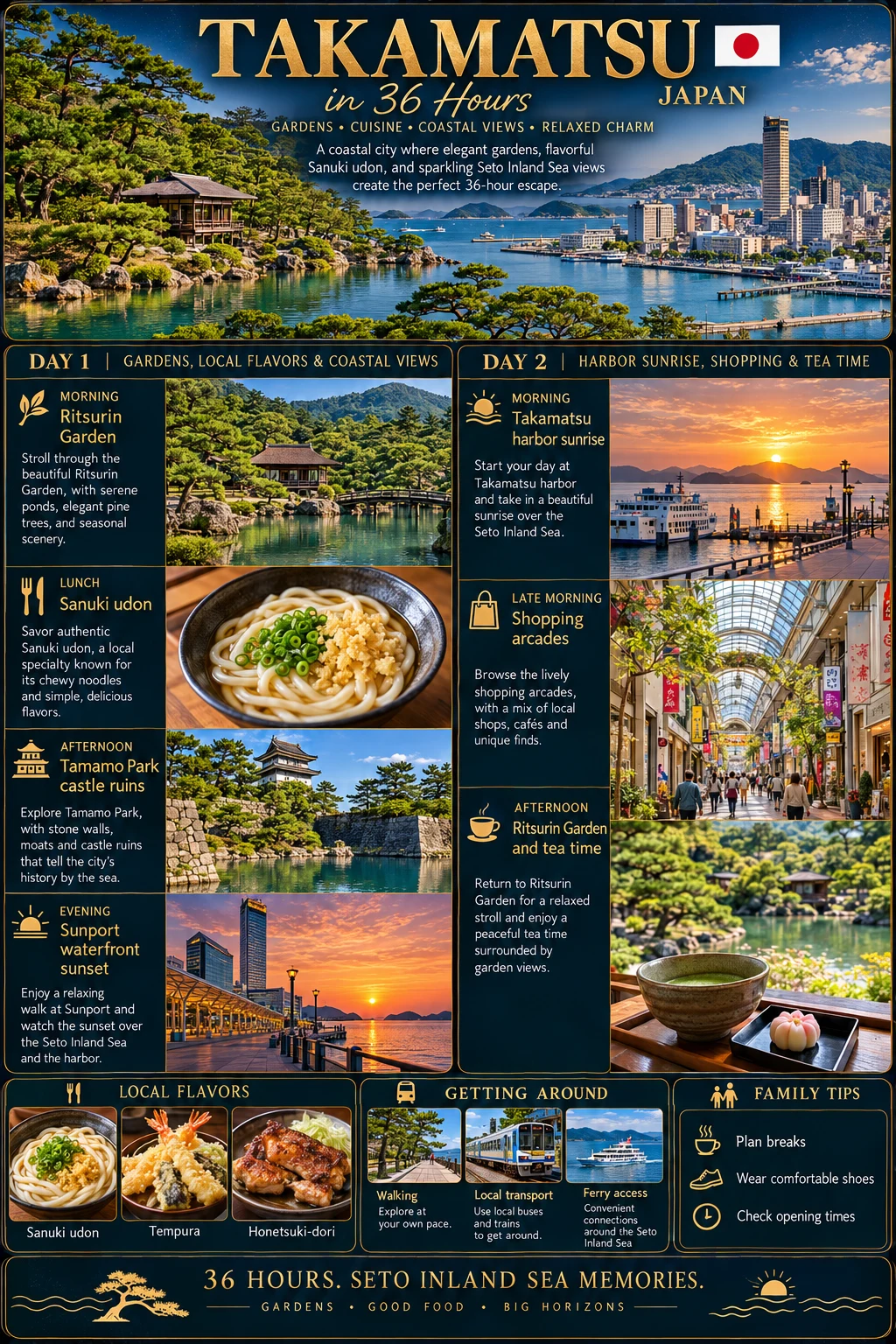
Start at Ritsurin Garden after breakfast. Follow the main southern-garden route at a slow pace, looking back as well as forward: bridges, pine trees and ponds appear differently with small changes of position. Two hours allows much more than a quick circuit. If you want tea, check the operating time and availability of the teahouse separately from the garden gate.
The garden’s own visitor page lists month-by-month opening, with winter closing around 5 p.m. and longer summer days. It also warns of closures during severe wind alerts. There is no need to use its very early summer opening to enjoy it. Families should treat this as a landscaped heritage garden rather than a ball-game park; supervise around water and do not bring food for the fish or birds.
11:30 a.m.–1 p.m. | Udon at the right time
Choose an udon shop for an early lunch. Sanuki udon is valued for its firm, springy noodles; a simple bowl lets that texture stand out. Watch how the shop works before joining the line: some are self-service, others take orders at tables. Ask staff where to return trays.
The official food guide notes that shops may close after selling out, so a particular noodle shop is a poor late-dinner guarantee. Broth may contain fish even when the toppings do not. Let hot noodles cool for children and ask about egg, wheat and seafood ingredients when needed.
1:30–3 p.m. | A castle shaped by the sea
Return toward the port and visit Tamamo Park, the historic site of Takamatsu Castle. Allow about an hour to look at the seawater moat, surviving structures and gardens. The prefectural site description explains the marine setting and distinguishes the park from a complete surviving castle keep. Do not arrive expecting a large intact donjon.
Gate hours vary, and the published regular closure is 29–31 December. Boat rides and building interiors have their own availability; the walk works without either. Keep children away from moat edges and use only authorised feeding arrangements if offered.
3–9 p.m. | Waterfront, rest and dinner
Walk toward the harbour for 30–45 minutes, then pause at your hotel. Later, explore the central shopping arcades and have dinner. For a change from noodles, look for honetsukidori, seasoned chicken on the bone, or local fish. The regional food overview describes these alongside Kagawa’s olive-related produce. Chicken can be strongly seasoned, so ask before ordering for children.
A short harbour stroll is a pleasant finish when weather permits. Ferries are working transport, and harbour edges need supervision. Do not add an evening island crossing unless you have checked the return service and are prepared for weather-related disruption.
Day 2
9:30 a.m.–noon | Everyday buildings at Shikokumura
Travel to Shikokumura, allowing approximately 35–55 minutes from central Takamatsu by rail and walking, or around 20–35 minutes by taxi. The museum’s access page gives rail and shuttle options; confirm the day’s timetable rather than assuming frequent buses.
Spend two hours among relocated historic buildings and exhibits about regional life. The site map identifies houses, a kabuki theatre, industrial structures and lighthouse-related buildings. Choose a selection and notice how work, climate and available materials shaped each one.
This is a sloping outdoor museum with uneven paths. Ask about suitable routes before bringing a wheelchair or stroller; do not assume every bridge and building is accessible. The operator lists Tuesday closure, moved to the following day when Tuesday is a national holiday. Weather and maintenance closures are also possible. On a closed day, move this visit to Day 1 and shift the garden and castle to Day 2, or keep a relaxed city day.
Noon–2 p.m. | Lunch near the museum
Have lunch before returning to town. The museum lists Waraya, an udon restaurant in relocated old buildings, as a nearby dining option. Check its own opening and queue before relying on it. This is a convenient possibility, not a compulsory stop. Allow extra time if the group needs a rest after the museum paths.
2:30–9 p.m. | A harbour-side finish
Return to central Takamatsu, then choose a café or browse the small shops around Kitahama Alley, identified in the tourism board’s local material. Individual businesses have their own calendars, so leave the stop flexible. Finish with an early dinner and luggage collection. A later departure leaves time for another short waterfront walk, not a rushed Yashima summit excursion.
Three quieter worthwhile corners
- Ritsurin’s northern paths: extend here if energy allows after the busier southern views.
- Kitahama Alley on a weekday: a small-scale café and browsing stop near the waterfront.
- Tamamo Park’s garden areas: linger away from the entrance rather than treating the castle site as a quick photograph.
Practical seasonal notes
Bring sun protection in summer and a windproof layer for the port. Rain makes stone paths and bridges slippery. Garden boat rides, craft workshops and island trips need separate bookings or operating checks. With children, keep one substantial outing each morning and let the afternoon remain adjustable; excellent noodles and a relaxed view are enough to complete a day.
Sources & travel planning
Research checked 2026-10-16. This date describes the guide’s research, not a guarantee of current conditions. Opening hours, prices, access, transport and travel advice can change. Recheck the official sources before booking and departure. Walking and journey times are planning estimates.
- my-kagawa.jp ↗
- my-kagawa.jp ↗
- my-kagawa.jp ↗
- my-kagawa.jp ↗
- my-kagawa.jp ↗
- shikokumura.or.jp ↗
- shikokumura.or.jp ↗
- shikokumura.or.jp ↗
- shikokumura.or.jp ↗
- my-kagawa.jp ↗
Found a change? Contact Only36Hours about a correction.