36 Hours in Tarragona: Roman Stone, Sea Air and the Part Alta
Verified: 16 October 2026. Tarragona’s great pleasure is the proximity of things: a Roman amphitheatre above the Mediterranean, medieval streets rising behind it, and a working port below the modern city. Give the monuments context, then leave enough time for lunch. This itinerary runs from breakfast on Day 1 to dinner on Day 2, with one overnight stay. It stays within the city rather than adding Barcelona, a theme park or an excursion to the aqueduct.
Stay around Rambla Nova or the lower edge of the Part Alta if you want straightforward evening walks. Expect hills, steps and irregular paving in the old town. Walking times below are planning estimates, not promises of step-free routes.
Day 1: Rome beside the Mediterranean
09:00–11:00 | Breakfast and the amphitheatre
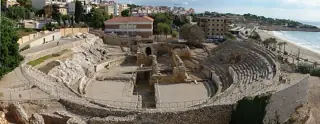
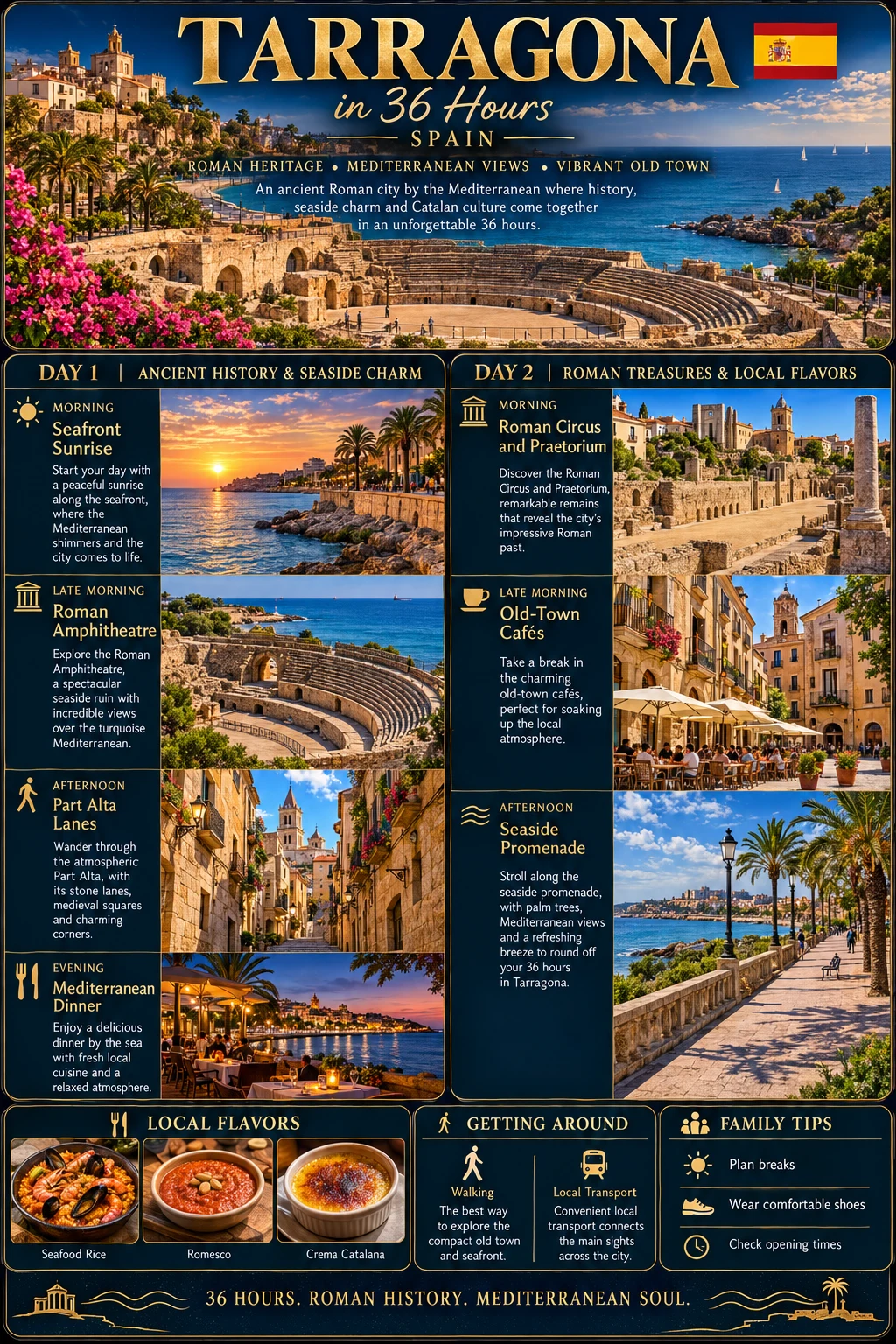
Start with coffee and a pastry near Rambla Nova, then walk to the Balcó del Mediterrani for your first view of the coast. Allow another 10–15 minutes to descend towards the amphitheatre. Seen against the sea, its surviving seating makes an immediate introduction to Roman Tarraco; later religious structures inside the arena reveal that the site had several lives.
Spend around an hour visiting rather than treating the entire morning as a photo stop. The city museum’s timetable governs access: ordinary Mondays are closed, while Sundays and holidays finish at 14:30. On a Monday arrival, swap the Roman visits to Day 2 and use today for the cathedral, Rambla Nova and waterfront. Check holiday exceptions before buying tickets.
11:15–13:00 | Circus and Praetorium
Walk uphill for roughly 10–15 minutes to the Roman Circus and Praetorium complex. These remains explain how a much larger Roman public city sits beneath the streets you are using. Give the passages and interpretation 75–90 minutes, taking the tower viewpoint only if stairs suit your group. Two archaeological visits are enough before lunch, particularly with children.
On Sundays, visit the Circus directly after the amphitheatre so both fit before the early closure. Do not leave either for an assumed late-afternoon opening. Children may find the tunnels more engaging than a lengthy discussion of imperial administration; ask them to compare the buildings’ shapes instead.
13:00–16:30 | Lunch and the Part Alta
Eat in the old town, then wander without trying to enter every building. Plaça de la Font, the lanes around Carrer Major and the cathedral steps connect comfortably in short stretches. Look for reused stone and the changes between broad civic spaces and narrow residential streets. Keep doorways clear and remember that these are people’s homes.
Take a proper hotel or café break during the hottest part of a summer afternoon. The tourism office’s walking-route material helps distinguish the Roman route from the medieval town, without requiring a paid stop at every turn.
17:00–21:00 | Rambla Nova and dinner
Return to Rambla Nova for a slower promenade and another sea view. If everyone still has energy, descend towards the waterfront on an established public route; the railway means the beach is not accessible simply by walking straight downhill from any viewpoint. Leave swimming for a separate, supervised beach session and follow local flags.
Dinner can be simple: tomato-rubbed bread, grilled fish, seasonal vegetables or rice. Ask about shellfish and nuts rather than assuming a sauce is safe for an allergy. Families wanting an early meal should check kitchen times beforehand; a terrace serving drinks may not yet be serving dinner.
Day 2: Cathedral gardens and the fishermen’s quarter
09:30–12:00 | Cathedral and cloister
Allow about 60–90 minutes for the cathedral, including its cloister and the areas included in your chosen ticket. The operator also identifies the Gardens of Santa Tecla la Vella as part of the visitor experience. Architecture enthusiasts can linger; younger visitors may prefer a short search for carved animals and a quiet garden pause.
This slot needs two calendar adjustments: Monday tourist entry starts at 10:30, and Sunday tourist entry starts at 14:00. On Sunday, move the Serrallo walk and lunch earlier, then return for the cathedral in the afternoon. Religious celebrations and specified holidays can override normal hours. Reserve a guided visit if you want interpretation; do not assume admission includes every special tour or tower experience.
12:00–15:30 | Walk down to El Serrallo
From the upper town, allow 30–45 minutes to reach El Serrallo on foot, longer with stops, or take a short taxi ride if the descent is tiring. The change of atmosphere is the point: fishing heritage, waterfront restaurants and lower, more domestic streets replace monumental stone.
Order a leisurely seafood lunch if that suits your diet. Tarragona’s romesco is more than the familiar condiment: the tourism office describes a local fish stew tradition rooted in the fishermen’s quarter. Ask what fish is being used and whether the dish is intended for sharing. A plate of rice or plainly cooked fish can be easier for children than a large mixed-shellfish order.
16:00–20:30 | One final walk, then departure
Follow the public waterfront around El Serrallo, staying out of operational port areas. Return to collect luggage with time for an early supper or snack. Do not use this final window for an ambitious out-of-town excursion.
Three quieter places worth keeping
- The cathedral’s garden areas: a calmer complement to the grand interior, within the visitor route and its opening hours.
- Residential lanes away from Carrer Major: best explored in daylight, without entering private courtyards.
- El Serrallo’s back streets: step away from the restaurant frontage to appreciate the scale of the fishing neighbourhood, while respecting residents.
Practical checks that matter
The MNAT’s main archaeological museum remains listed as closed for renovation, with reopening planned for the final quarter of 2026, not yet confirmed on its visitor page. Its former Tinglado 4 exhibition closed permanently on 28 June 2026. Neither is an assumed indoor fallback. Casa Castellarnau is also listed closed for works by the city museum.
Tarragona and Camp de Tarragona are different railway stations. The municipality explains the distinction: the high-speed station is outside the city. Allow a separate transfer and check your actual train and bus connections. In summer, carry water and move exposed ruins earlier; after heavy rain, respect site and coastal closures. For limited mobility, confirm each monument’s accessible sections before buying a combined ticket.
Sources & travel planning
Research checked 2026-10-16. This date describes the guide’s research, not a guarantee of current conditions. Opening hours, prices, access, transport and travel advice can change. Recheck the official sources before booking and departure. Walking and journey times are planning estimates.
- tarragona.cat ↗
- tarragonaturisme.cat ↗
- catedraldetarragona.com ↗
- tarragonaturisme.cat ↗
- tarragonaturisme.cat ↗
- mnat.cat ↗
- tarragona.cat ↗
Found a change? Contact Only36Hours about a correction.