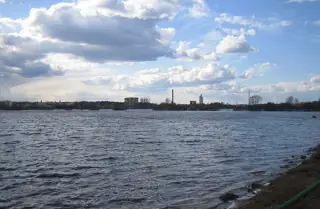
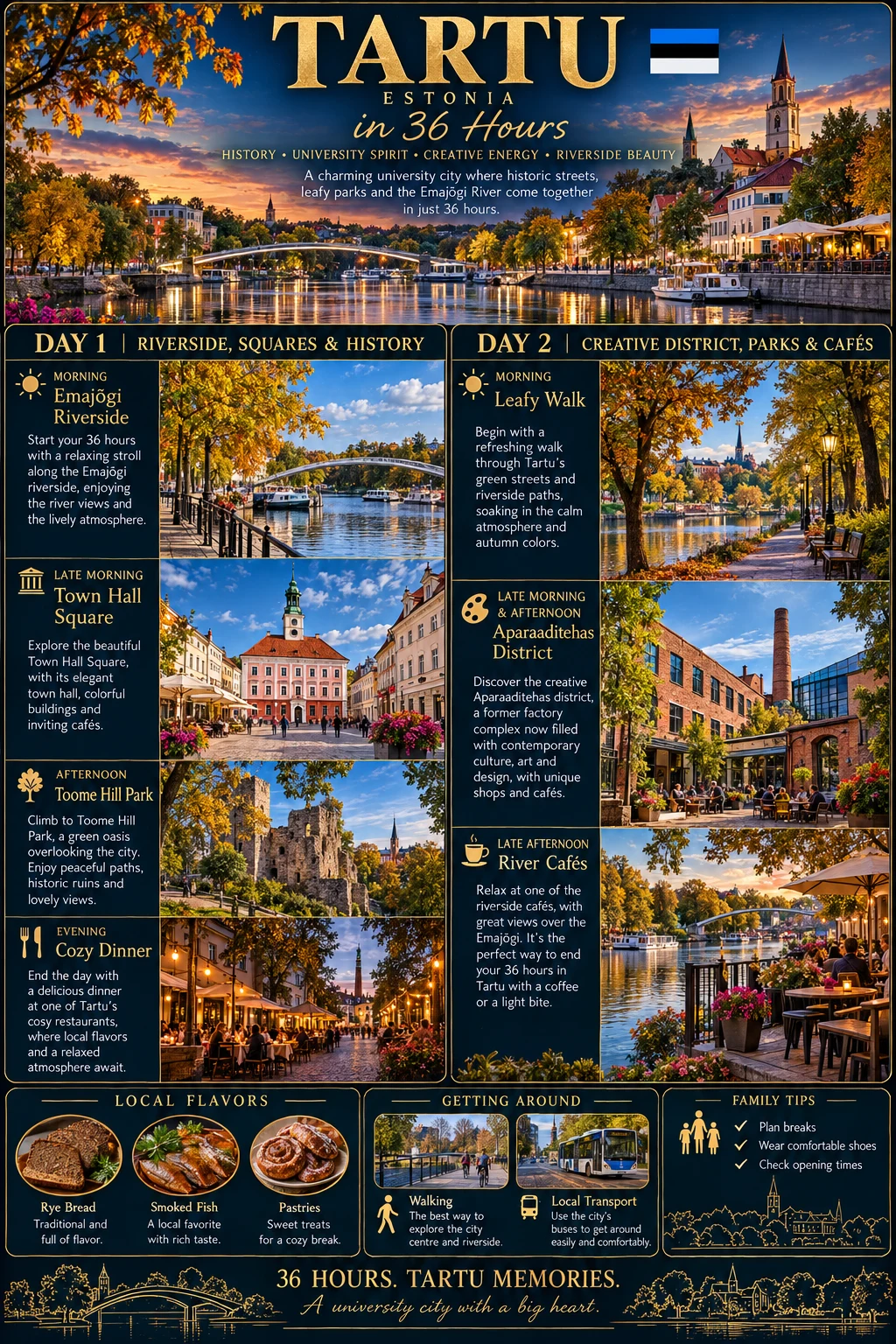
36 Hours in Tartu: University Streets, River Walks and Estonian Stories
Verified: 16 October 2026. Tartu rewards a slower pace than its modest size might suggest. University buildings, wooden neighbourhoods and the Emajõgi river give the city an everyday rhythm, while the Estonian National Museum supplies the bigger national story. This overnight itinerary starts with breakfast and finishes after an early dinner the following day. Its main choice is deliberate: spend a generous half-day at the national museum, or choose AHHAA’s hands-on science with children, rather than rushing through both.
A central hotel makes most of Day 1 walkable. The bus station is close to the centre; from the railway station, budget roughly 20–30 minutes on foot to Town Hall Square, or take a local bus or taxi with luggage. Check the city’s transport information for tickets and current routes, and validate your journey when boarding.
Day 1: The university city at walking speed
09:00–11:00 | Coffee, the square and university streets
Start near Town Hall Square, where the Kissing Students fountain sets a suitably collegiate tone. Walk up towards the university’s main building, then follow nearby streets without assuming that teaching buildings are open sightseeing venues. The combination of bookshops, bicycles and cafés makes more sense when you leave time to sit down.
Choose a pastry, porridge or a savoury breakfast rather than beginning with a long attraction queue. Visit Estonia’s Tartu guide highlights the city’s established café culture, including Werner. Treat a named café as an option, not a compulsory reservation or a claim that there will be a table waiting.
11:00–13:00 | Toome Hill and cathedral views
Allow 10–20 minutes for the ascent into Toome Hill’s park, with longer for steps, photographs and rests. Follow open paths between viewpoints and the cathedral remains. This is an atmospheric walk, not a scramble among old masonry.
The university’s safety notice says access immediately beneath and around the ruin walls is restricted because falling material is possible. Stay outside barriers. The museum remains open independently, but do not interpret an open museum as permission to enter fenced ruins.
If history is your priority, spend about an hour in the University of Tartu Museum, replacing some of the park walk. Its regular schedule is Tuesday–Sunday in May–September and Wednesday–Sunday in October–April. Cathedral towers are a May–September option only, with stairs; they are not the winter viewpoint in this itinerary.
13:00–16:30 | Lunch and a small botanical world
Descend for lunch, then continue to the University of Tartu Botanical Garden, roughly 10–15 minutes from the central square. Plan 60–90 minutes among the outdoor collections and, if desired, the paid greenhouses. In spring and summer, the garden is an easy place to linger; in poor weather, the warm glasshouses give the stop a different purpose.
The operator lists greenhouses daily 10:00–17:00 and longer outdoor hours that vary by season, with Christmas closures on 24–26 December. Arrive before 16:00 if you want a relaxed indoor visit. Families with pushchairs should use the riverside entrance identified by the university, checking that gate’s separate opening hours. Do not let children pick plants or climb into beds.
17:00–21:00 | Emajõgi evening
After a hotel break, take a short riverside walk and choose dinner near the centre. Keep the route compact in winter, when darkness comes early and paths can be icy. In summer, the long light is an invitation to linger rather than a reason to fill the evening with additional museums.
Look for rye bread, fish, seasonal vegetables or a warming soup on local menus, then leave room for a cake. These are suggestions for an Estonian meal, not a promise that every café serves a particular traditional dish. Ask about ingredients if you avoid dairy, fish or gluten.
Day 2: Choose one substantial indoor visit
09:00–10:00 | Breakfast and the journey to Raadi
For the Estonian National Museum, leave the centre with enough time to arrive around opening. Allow roughly 20–35 minutes by bus including the walk and waiting, or 10–15 minutes by taxi in ordinary traffic. Walking from the centre can take 35–50 minutes and uses energy better saved for the galleries if you have young children.
The museum’s visitor page directs visitors to Entrance A and lists bus 7 from central stops including Soola and Vabaduse. Recheck the live timetable rather than assuming a frequent service at every hour.
10:00–14:00 | Estonian National Museum, or AHHAA
At the national museum, choose a manageable selection of galleries about Estonian life and culture. Allow about three hours with a break, rather than trying to absorb the entire building. Ask staff which displays best match your interests and which family activities are available that day. Prams and carts must be left in designated parking or folded in the cloakroom, so plan how a small child will manage the galleries. The regular calendar is Tuesday–Sunday, 10:00–18:00, with Monday closure; ticket sales finish an hour before closing.
For a science-focused family visit, substitute AHHAA, close to the centre, for this whole block. It currently opens daily, with longer Friday and Saturday hours. Check holiday exceptions, planetarium language and separate bookings before promising a particular show. Hands-on exhibits need patient adult supervision; not every activity will suit every height or age. A three-hour visit and lunch is a better plan than squeezing AHHAA in after Raadi.
14:30–17:00 | Supilinn and the river
Return to the centre, then walk towards Supilinn, allowing 15–25 minutes depending on your starting point. Wooden houses and modest streets offer a different view of Tartu from its university monuments. The tourism office describes the riverside promenade as a 1.3-kilometre stretch beside the neighbourhood. Walk as far as the weather and energy allow, then turn back.
17:30–20:30 | A final meal without rushing
Have an early dinner and collect luggage. Allow a separate station transfer and a buffer for your departure. If you arrive on a Sunday and leave Monday, place the national museum on Day 1, then move the central walk and botanical garden to Monday; AHHAA is also a useful Monday choice.
Three quieter places worth keeping
- Toome Hill’s side paths: a pause among trees, using open routes away from the restricted ruin walls.
- The botanical garden’s outdoor collections: compact enough for a peaceful hour without travelling out of town.
- Supilinn’s river promenade: a gentle contrast to the busiest central streets, with care around the unguarded water edge.
Carry layers even in summer, and footwear with grip in the cold months. Snow changes the practicality of both hill paths and pushchairs. For wheelchair access, check the specific museum entrance and route beforehand; the flat riverfront is an easier outdoor substitute than insisting on every hilltop stop.
Sources & travel planning
Research checked 2026-10-16. This date describes the guide’s research, not a guarantee of current conditions. Opening hours, prices, access, transport and travel advice can change. Recheck the official sources before booking and departure. Walking and journey times are planning estimates.
- tartu.ee ↗
- visitestonia.com ↗
- ut.ee ↗
- muuseum.ut.ee ↗
- natmuseum.ut.ee ↗
- erm.ee ↗
- ahhaa.ee ↗
- visittartu.com ↗
Found a change? Contact Only36Hours about a correction.