36 Hours in Tétouan: Medina Craftsmanship and an Andalusian Thread
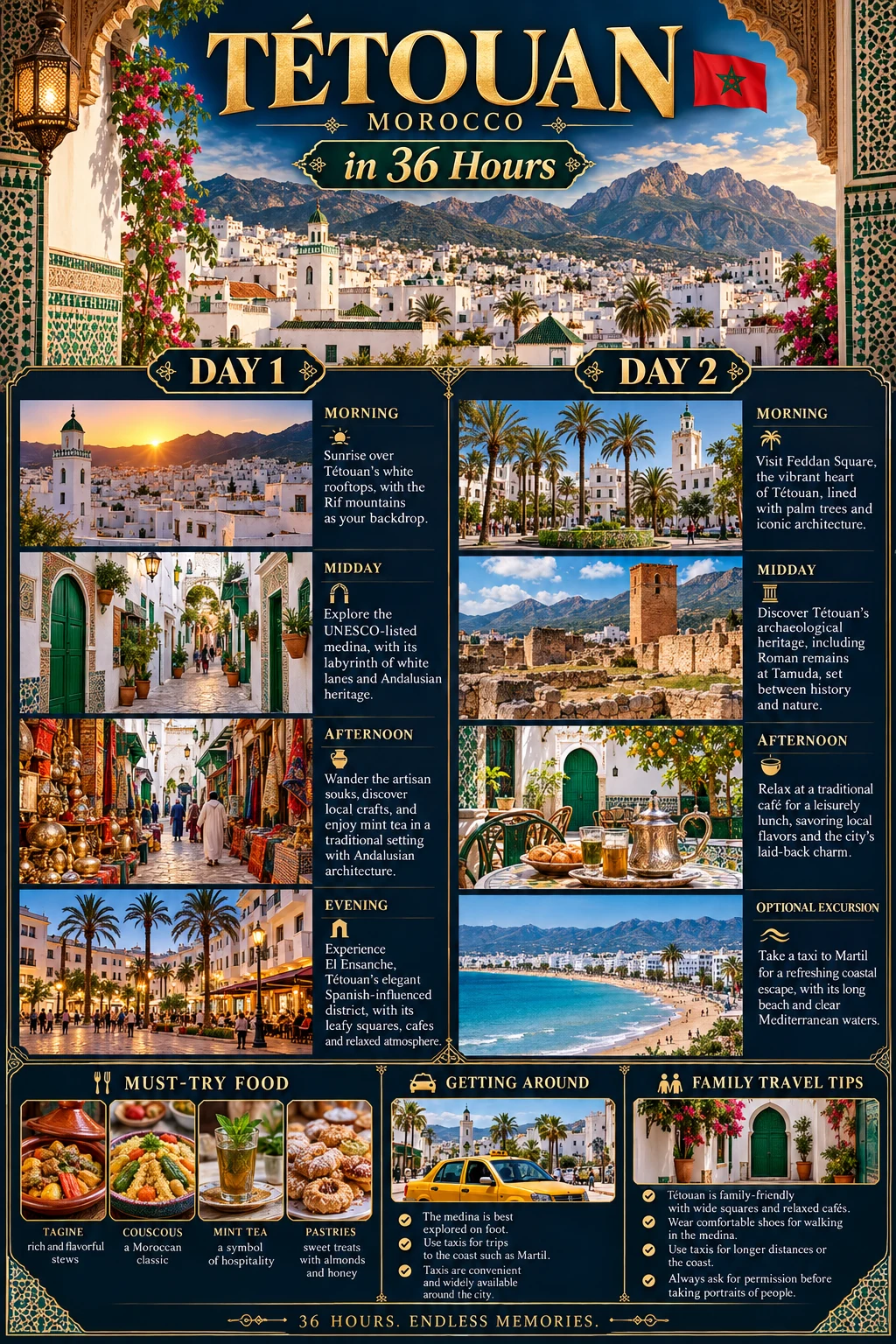
Verified: 16 October 2026. Tétouan deserves more than a hurried stop between Tangier and Chefchaouen. Its compact medina preserves an unusually coherent urban world, while the neighbouring Ensanche tells a different story through Spanish-era streets and façades. The contrast is easy to appreciate over one overnight stay. This route begins with breakfast on Day 1 and finishes after an early dinner on Day 2; it does not add a beach trip or another mountain town.
Choose accommodation with clear arrival instructions. A medina address may require a walk from the nearest vehicle access point, so ask where a taxi should leave you and whether luggage assistance is available. Stay near the medina edge if steps, navigation or late arrivals are concerns. The timings below are comfortable planning ranges rather than guarantees through winding streets.
Day 1: Understand the medina before getting lost in it
09:00–12:00 | Breakfast and a guided introduction
Begin with bread, eggs or a pastry and tea, then meet a properly licensed guide arranged through your accommodation or a verified local service. Agree the duration, language, fee and whether shopping stops are included before setting off. A two- to three-hour introduction is useful here: it helps distinguish workshops, residential lanes, markets and religious buildings that can otherwise blend into a confusing maze.
The Moroccan National Tourist Office highlights the medina’s Andalusian connections, craft traditions and historic Jewish quarter. Ask your guide to focus on those layers rather than a succession of shops. Guersa El Kébira and the lanes around the Mellah offer context, but avoid treating residents or craftspeople as exhibits. Ask before taking close photographs and do not enter a workshop unless invited.
The Royal Palace is an exterior landmark, not an assumed public interior visit. Likewise, do not promise entry to mosques. Follow local access rules and security instructions around official buildings.
12:00–14:00 | Lunch and a pause
Leave time for a seated lunch rather than trying to eat while navigating the busiest lanes. A tagine, grilled fish or a selection of cooked vegetables makes a manageable meal; ask what is available that day. Moroccan dishes such as pastilla and couscous vary by kitchen and may require advance ordering. The national food guide provides useful background, but no one dish should become a condition of enjoying lunch.
With children, order a small portion of something familiar alongside the shared dishes. Check nuts, eggs, dairy and fish ingredients explicitly, especially in pastries and sauces. Then take a hotel break during summer heat.
14:30–16:00 | Bab el Oqla Museum
Walk towards Bab el Oqla, allowing 15–30 minutes depending on where you are staying. The museum, housed in a historic bastion, gives substance to what you saw in the streets: woodwork, textiles, jewellery and objects connected with local life. Spend around an hour, then enjoy the interior garden if accessible.
The operator currently lists 10:00–18:00 opening except Tuesday. If Day 1 is Tuesday, move this visit to Day 2 and use this block for the Ensanche walk instead. The historic building has different levels; confirm step-free access before visiting if stairs would be a problem. A short, focused visit is more rewarding for children than reading every label.
16:30–21:00 | Tea and an unhurried evening
Return towards the medina edge for tea or coffee. Choose a terrace for its comfortable setting, not because it claims to offer an exclusive view into private homes. If you buy crafts, compare a few pieces and agree the price before purchase. It is fine to decline an unsolicited guide or an unwanted shop visit politely and firmly.
Eat near your accommodation and use a known route home. Keep your phone and valuables discreet in crowded lanes. The current official travel advice recommends care with petty theft and unofficial guides; a quieter street after dark is not automatically the best place for a visitor to wander.
Day 2: Archaeology and the new town
09:00–11:30 | A later start and the Archaeological Museum
Have breakfast without rushing, then reach the Archaeological Museum around its 10:00 opening. It sits centrally on Avenue Ben Hssain, a short walk from the medina edge. Allow 60–90 minutes for a selection of objects from northern Morocco and the garden’s mosaics, rather than attempting to memorise every period represented.
The collection adds a much longer regional timeline to yesterday’s urban history. It is particularly useful if the medina walk left you wondering what preceded the familiar Andalusian and Spanish connections. The museum currently closes Tuesdays, like Bab el Oqla. If Day 2 is Tuesday, visit archaeology on Day 1 before or instead of Bab el Oqla, then make Tuesday an outdoor and café day. You do not need both museums if the rearrangement becomes tiring.
11:30–14:00 | Ensanche and lunch
Spend the late morning walking the Spanish-era district around Avenue Mohammed V and Place Moulay el Mehdi. The broader streets and European-style façades make the contrast with the medina immediately visible. View the church exterior respectfully, without assuming visitor access or a particular service schedule.
Pause for lunch rather than adding a distant attraction. This is a good occasion to try fish or a dish recommended by your host, followed by a small almond pastry if allergies permit. Ask whether tea can be served with less sugar if that is your preference. Keep drinking water with you, particularly on hot afternoons.
15:00–18:00 | Return with a purpose
Revisit one part of the medina you understood and enjoyed yesterday, perhaps to buy a piece of embroidery or look more closely at a gate. Allow an hour or two, with a clear meeting point if anyone separates. A return visit is often more satisfying than expanding the route into unfamiliar lanes when tired.
If you moved Bab el Oqla from Tuesday, use this afternoon for it instead. Otherwise leave time for a café and luggage collection. Avoid bolting on Chefchaouen or Tamuda Bay: each adds transport and reduces the breathing room that makes this a worthwhile city stay.
18:00–20:30 | Early dinner and departure
Have an early meal or arrange food around your onward journey. Confirm the exact bus station or airport transfer pickup with your operator; allow extra time to walk out of the medina with bags. Families should arrange an appropriate child restraint before a taxi journey rather than assuming one will be available at the curb.
Three quieter places worth keeping
- Bab el Oqla’s interior garden: a small pause within the museum visit, subject to its Tuesday closure.
- The Archaeological Museum garden: a calmer place to look at the mosaics rather than rushing straight back to the streets.
- Ensanche side streets off the main promenade: architectural detail without the medina’s narrowest bottlenecks, best explored in daylight.
Spring and autumn usually make walking easier than the hottest summer afternoons. Rain can make paving slippery. During Ramadan and religious holidays, confirm museum and restaurant arrangements locally, dress considerately and avoid assuming ordinary daytime food service. For pushchairs or limited mobility, ask your guide for a shorter route with fewer steps and retain the wider new-town streets as an alternative.
Sources & travel planning
Research checked 2026-10-16. This date describes the guide’s research, not a guarantee of current conditions. Opening hours, prices, access, transport and travel advice can change. Recheck the official sources before booking and departure. Walking and journey times are planning estimates.
Found a change? Contact Only36Hours about a correction.