36 Hours in Tomar: Templar Stonework and Life Beside the Nabão
Verified: 16 October 2026. Tomar deserves an overnight stay because the town below its famous convent has a character of its own. The Nabão runs past old industrial buildings and an island park; small streets connect a handsome central square with the remains of a Jewish community’s medieval gathering place. This itinerary runs from breakfast on Day 1 to dinner on Day 2. Its pace leaves room for the hilltop monument without turning the rest of town into an afterthought.
Stay near Praça da República or the river. The lower centre is manageable on foot, with most transfers taking 5–20 minutes. The convent is a substantial uphill walk: allow roughly 25–40 minutes from the square, or arrange a short taxi ride. Walking times are estimates, and cobbles, heat and mobility needs can change them considerably.
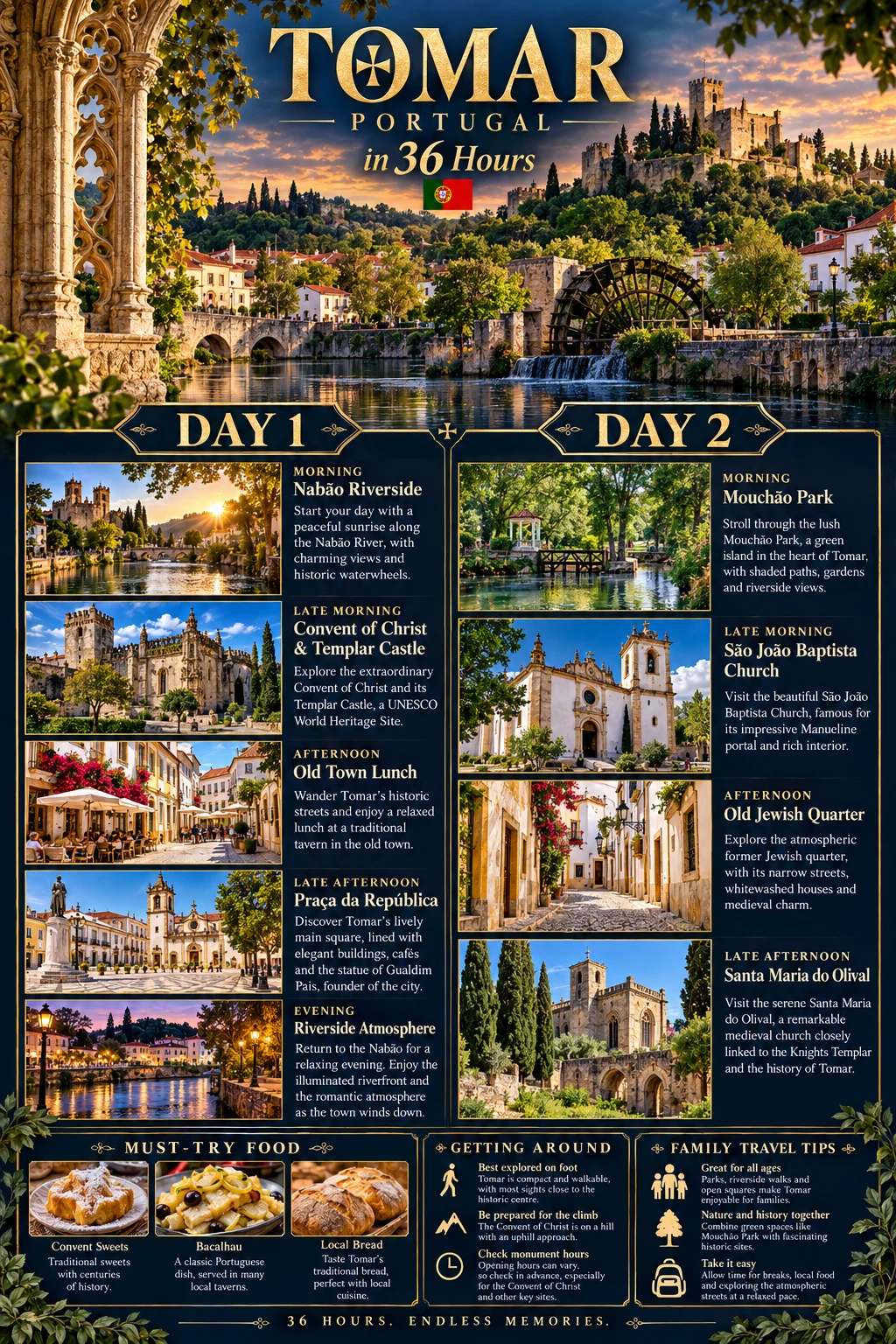
Day 1: The convent and the town beneath it
09:00–12:00 | Convent of Christ
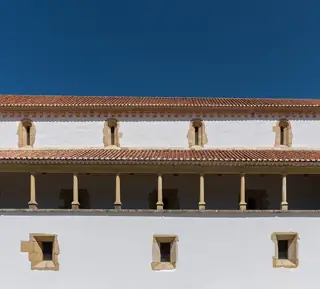
Have breakfast before going uphill, then give the Convent of Christ an unhurried morning. Its relationship with the Knights Templar and later Order of Christ is the essential historical thread. Within the permitted visitor circuit, make the richly decorated Charola your main point of attention rather than trying to photograph every doorway.
There are important restoration restrictions. The operator currently lists closures affecting several cloisters, terraces and garden areas. Do not assume that all the famous viewpoints, including approaches around the Manueline window, will be available. Ask which circuit is operating before buying tickets; a guide can help explain sections you cannot enter. The published seasonal schedule is 09:00–17:30 from October to May and 09:00–18:30 from June to September, with last entry 30 minutes earlier. Listed closure days include 1 January, 1 March, Easter Sunday, 1 May and 24–25 December. Official monument information.
Families should plan a shorter selection of rooms, followed by a proper break. Ask the operator about the accessible circuit and stroller arrangements before arrival; this is a historic complex with uneven surfaces, rather than a uniformly step-free museum.
12:00–14:00 | Lunch around Praça da República
Return by taxi or the public-road approach. Do not plan a shortcut through Mata Nacional dos Sete Montes: the municipality’s September 2026 update describes continuing storm-recovery work and only a hoped-for partial reopening in October, not confirmed access. Follow current barriers and obtain explicit local confirmation before entering. Municipal recovery update.
Settle into the lower town for lunch. Rather than another attraction immediately, spend time looking at the square and the exterior of São João Baptista. Enter the church only if visitor access is available and worship is not underway. Choose a simple daily lunch special, with a lighter portion for children if available, and leave room for a pastry later.
14:00–16:00 | The synagogue and old streets
Walk a few minutes to the synagogue and its interpretation centre. This compact visit brings Jewish history into an itinerary that could otherwise focus entirely on Christian military orders. Read the displays slowly, then wander nearby lanes without treating residential doorways as public attractions.
The municipal schedule is Tuesday–Sunday, with a lunch closure: April–September 10:00–13:00 and 14:00–18:00; October–March 10:00–12:00 and 14:00–17:00. It closes Mondays and on 1 January, 1 May and 25 December. If Day 1 is Monday, move this visit to Tuesday afternoon and use today for the riverside. Municipal synagogue information.
16:00–20:30 | Mouchão and dinner
Take a café break, then cross to Parque do Mouchão. Its paths and waterwheel make a useful change of scale after the convent. Keep young children close at bridges and river edges; do not assume every stretch has a protective railing. In rain or high water, follow local closures rather than attempting a complete island circuit. Official park guide.
Return to your accommodation before dinner. Try fatias de Tomar, a distinctive egg-yolk sweet traditionally cooked with steam, as a shared dessert. Local queijadas can include almond and chila squash, so ask about ingredients if allergies matter. Portuguese tourism’s Tomar guide.
Day 2: The other side of the river
09:00–11:30 | Santa Maria do Olival
After breakfast, walk across the river towards Santa Maria do Olival, allowing approximately 15–25 minutes from the central square. The church’s association with Templar masters gives context to yesterday’s hilltop visit, while the rose window and separate tower reward an exterior stop even when the interior is unavailable.
Aim for a visit after 10:00. The official calendar is Tuesday–Sunday with seasonal lunch closures; winter morning access finishes at noon. Monday visitors should treat this as an exterior walk, and everyone should give services priority. Do not follow stories of secret tunnels as if they describe an accessible visitor route. Official church history and visiting information.
11:30–14:30 | The working river
Head back towards the Levada area, taking around 15–20 minutes. Here the cultural complex tells a different story through milling, metalworking and electricity generation. Ask the visitor office which museum sections are open that day and whether a visit requires booking. Choose one available section, rather than assuming every industrial building is open on a common ticket. If interiors are unavailable, the riverfront setting still helps explain why industry developed here. Levada cultural complex.
Have lunch nearby, then leave a generous rest period. This is a deliberately small-city itinerary: you do not need an out-of-town excursion to fill every remaining hour.
15:30–20:30 | A final slow circuit
Use the afternoon for the synagogue if you moved it, a café, and a final walk along the central streets. Pick up pastries to take away, browse shops while they are open, and finish with an early dinner. If departing by train, check the actual service in advance and allow time to collect luggage; do not assume a frequent late-evening connection.
Three quieter places worth your time
- Santa Maria do Olival’s exterior: a rewarding architectural stop away from the convent circuit.
- Mouchão on a weekday morning: the river and paths offer a softer start, although events can change the atmosphere.
- Rua dos Moinhos and the Levada riverside: look at the relationship between water, buildings and former industry rather than rushing to another monument.
Plan around the conditions
Spring and autumn can be comfortable for walking; summer calls for an early hill visit, water and shaded breaks. Wet stone can be slippery in winter. Check restoration notices shortly before travel, particularly for the convent and storm-affected woodland. Reserve accommodation for festivals and busy weekends, but keep the daytime plan flexible enough for closures, weather and children’s energy.
Sources & travel planning
Research checked 2026-10-16. This date describes the guide’s research, not a guarantee of current conditions. Opening hours, prices, access, transport and travel advice can change. Recheck the official sources before booking and departure. Walking and journey times are planning estimates.
- museusemonumentos.pt ↗
- cm-tomar.pt ↗
- cm-tomar.pt ↗
- turismo.cm-tomar.pt ↗
- visitportugal.com ↗
- turismo.cm-tomar.pt ↗
- levada.cm-tomar.pt ↗
Found a change? Contact Only36Hours about a correction.