36 Hours in Trier: Roman Scale, Cathedral Quiet and the Moselle
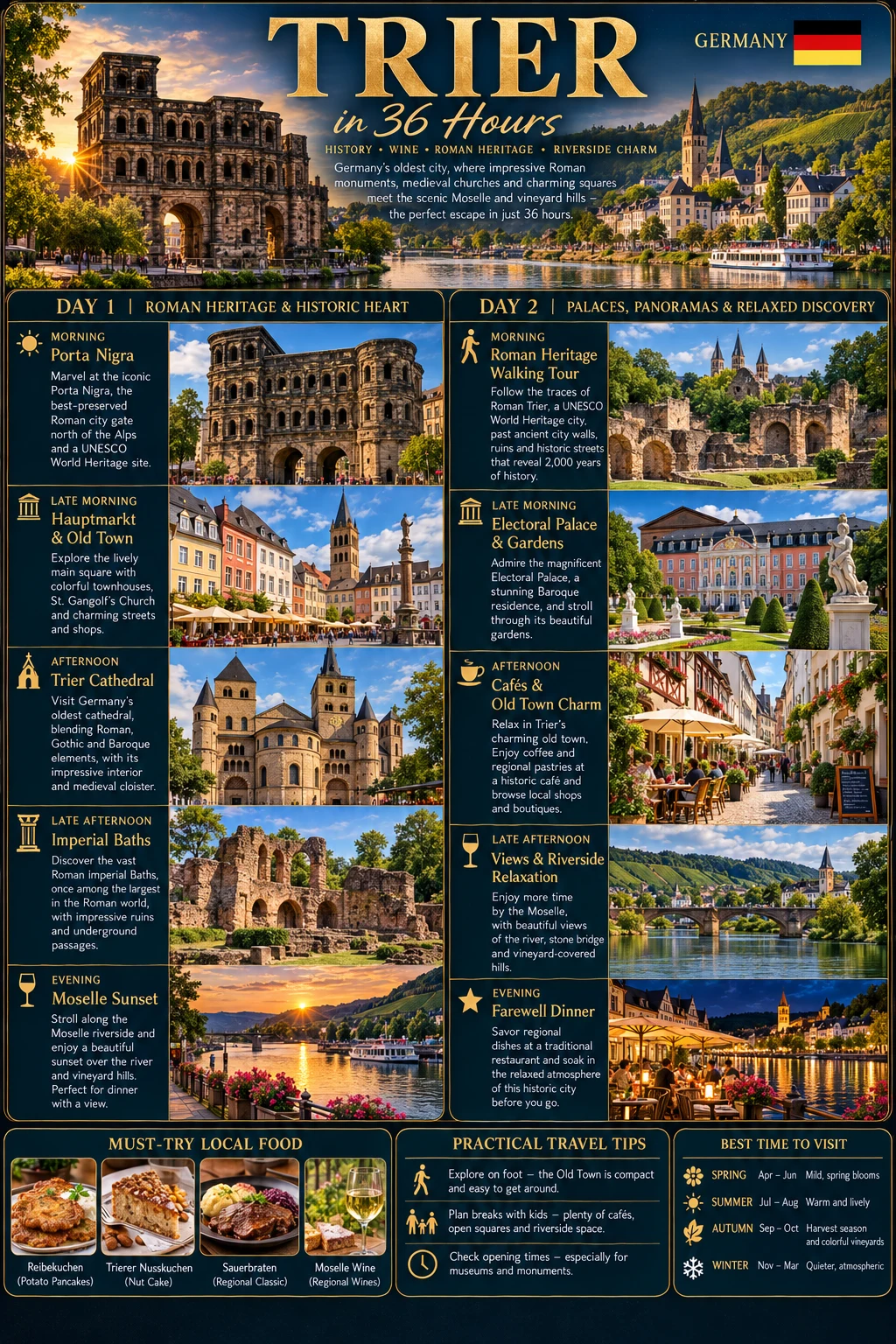
Verified: 16 October 2026. Trier’s Roman monuments are impressive enough to dominate a short trip, but the city becomes more interesting when you leave time for its later layers: the cathedral, market square, palace gardens and riverside neighbourhoods. This itinerary chooses a few major sites rather than trying to complete every Roman ruin. It runs from breakfast on Day 1 to dinner on Day 2, with one overnight stay.
Stay between Porta Nigra and the cathedral for an easy walking base. The main railway station is about 15–20 minutes from Porta Nigra and the central shopping streets. Most central transfers take 5–20 minutes; the Moselle riverfront requires a separate walk or short bus/taxi ride. These are approximate planning times, not live transport estimates.
Day 1: Gateway, market and churches
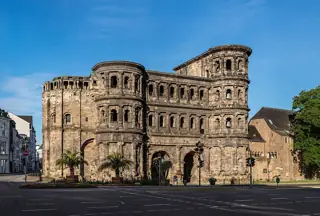
09:00–11:30 | Porta Nigra
Start with breakfast, then approach Porta Nigra from outside the old town to appreciate its scale. The dark stone gate makes a strong introduction to Roman Trier, but its later uses are part of the story too. Allow around an hour inside, taking time to understand the structure rather than rushing straight to the highest viewpoint.
Parts of the monument are currently scaffolded for restoration, although it remains open to visitors. Do not expect every photograph or view to be unobstructed. Opening hours shorten in winter, and last admission is normally 30 minutes before closing; check the current calendar, particularly around holidays. This morning block avoids late-entry problems. Official visitor information.
Upper levels require stairs. Families with pushchairs or visitors with mobility limitations should ask about the available route before paying and consider an exterior visit instead. A costumed history tour, when offered, is a booked programme rather than something automatically included with admission; check language and child suitability.
11:30–14:00 | Hauptmarkt and lunch
Walk along Simeonstraße towards Hauptmarkt, taking around 10–15 minutes with stops. Look at the changing scale of the buildings and the market-square details, then choose a seated lunch rather than eating on the move between monuments.
For a distinctly local, informal option, look for Flieten: crisp, seasoned chicken wings associated with Trier’s pub cooking. Ask about spice levels and provide a different choice for anyone who does not eat meat. Adults may want a Moselle wine with a later meal; children and non-drinkers need not build their visit around tastings. Local producer’s explanation of Flieten.
14:00–16:00 | Cathedral and Liebfrauenkirche
Walk a few minutes to the cathedral precinct. Spend time in the cathedral’s open areas, noticing the layers of architecture rather than expecting one uniform style. The adjacent Church of Our Lady provides a different spatial experience, but entry to either depends on services and events.
Sightseeing is permitted only outside worship and programmed activities. If an interior is unavailable, enjoy the precinct and return later rather than interrupting a service. The cathedral’s early opening time is not permission to sightsee during morning Mass. The Holy Robe is not an object you should assume will be on public display during an ordinary visit. Cathedral visitor information.
With children, choose a few carvings or animal details to look for, keeping voices low. The cloister, when accessible, makes a quieter stop, but avoid turning it into a running route or picnic space.
16:00–20:30 | Palace gardens and dinner
Walk 10–15 minutes towards the Electoral Palace and Palastgarten. Enjoy the palace exterior and the garden layout without assuming the administrative building is a freely accessible museum. The garden is a useful place to stop after an indoor afternoon; keep to public paths and follow event restrictions. Official palace-garden guide.
Return to your accommodation before dinner. Choose a restaurant in the centre, reserve if travelling on a busy weekend, and keep the evening short enough that tomorrow’s museum remains enjoyable.
Day 2: Objects, ruins and the river
09:00–12:30 | Rheinisches Landesmuseum
Have breakfast before the museum’s 10:00 opening. Its archaeological collections help turn the city’s large ruins into a more human story through objects, images and material traces of everyday life. Allow around two hours for a focused selection rather than trying to read every label.
The regular schedule is Tuesday–Sunday 10:00–17:00, with Monday closure and additional holiday exceptions. Large special exhibitions can have different arrangements. If Day 2 is Monday, visit on Day 1 afternoon instead of the churches, then move the cathedral precinct to Monday. Museum operator’s visitor information.
Ask about available family material and accessible routes on arrival. A multimedia presentation or special programme may have separate timing and language requirements; add it only if it replaces part of the gallery visit, not the lunch break.
12:30–15:30 | Lunch and the Imperial Baths
Eat nearby, then walk about 5–10 minutes to the Kaiserthermen. Give the ruins 60–90 minutes, including their interpretation. Although designed as an enormous bathing complex, they were not completed as originally intended; avoid imagining a fully functioning bathhouse simply because the surviving walls are monumental. State heritage explanation.
The site normally opens daily, closing at 18:00 in April–September, 17:00 in March and October, and 16:00 in November–February, with last admission 30 minutes earlier. The early-afternoon slot works across those seasons. Underground passages and uneven surfaces may not suit every visitor; follow the open circuit and keep children close. Current baths information.
If the weather makes the ruins unpleasant, substitute the nearby Constantine Basilica when visitor access permits. It opens only in the afternoon on Sundays and has winter lunch closures and some Monday closures. Services, concerts and rehearsals can override the timetable. Church operator’s schedule.
16:00–20:30 | Zurlauben and a final meal
Return through town, then head towards Zurlauben for a riverfront pause, allowing about 20–30 minutes from Porta Nigra or using local transport if needed. This former fishing neighbourhood gives you a different impression of Trier from the monumental centre. Choose a café or dinner spot with river views if the weather cooperates. Official Zurlauben guide.
Boat trips are optional and seasonal, subject to operator schedules and river conditions. Do not make one essential to the final hours before a train. Keep children back from the river edge and follow flood or maintenance barriers.
Three quieter worthwhile places
- The cathedral cloister when open: a respectful pause away from the busiest square.
- The less formal section of Palastgarten: useful for a gentle break between archaeology stops.
- Zurlauben on a weekday: linger by the Moselle, recognising that events and summer evenings can be lively.
Plan before you pay
Compare a combined antiquities ticket with the specific sites you will actually visit, rather than adding ruins to justify a pass. Check Monday and holiday closures, reserve language-specific tours, and pack shoes suitable for stairs and wet stone. Summer needs shade and water; winter calls for an earlier outdoor finish. The amphitheatre, Karl Marx House and outlying vineyards can all wait for a longer visit.
Sources & travel planning
Research checked 2026-10-16. This date describes the guide’s research, not a guarantee of current conditions. Opening hours, prices, access, transport and travel advice can change. Recheck the official sources before booking and departure. Walking and journey times are planning estimates.
- trier-info.de ↗
- flietenfranz.de ↗
- trier-info.de ↗
- trier-info.de ↗
- zentrum-der-antike.de ↗
- zentrum-der-antike.de ↗
- trier-info.de ↗
- trier.ekir.de ↗
- trier-info.de ↗
Found a change? Contact Only36Hours about a correction.