36 Hours in Úbeda: Renaissance Squares, Olive Oil and Pottery Traditions
Verified: 16 October 2026. Walks and transfer times are estimates. Monument schedules can change for worship, events and restoration.
Úbeda’s most memorable view is not one building but a whole conversation between them: palaces, a funerary chapel and broad stone squares above a landscape of olive trees. Give that architecture time, then follow the town’s living traditions into an olive-oil centre and pottery district. This itinerary stays in Úbeda rather than squeezing neighbouring Baeza into an already short visit.
Choose accommodation in or near the historic centre, asking about parking, restricted streets and stairs before arrival. The railway station serving the wider area is Linares-Baeza, not a station in central Úbeda; plan the onward connection separately. From Úbeda’s bus station, allow roughly 20–30 minutes on foot to the monumental quarter or use a taxi with luggage. Once settled, most central transfers take 5–15 minutes, though stone paving and slopes make good shoes worthwhile.
Day 1
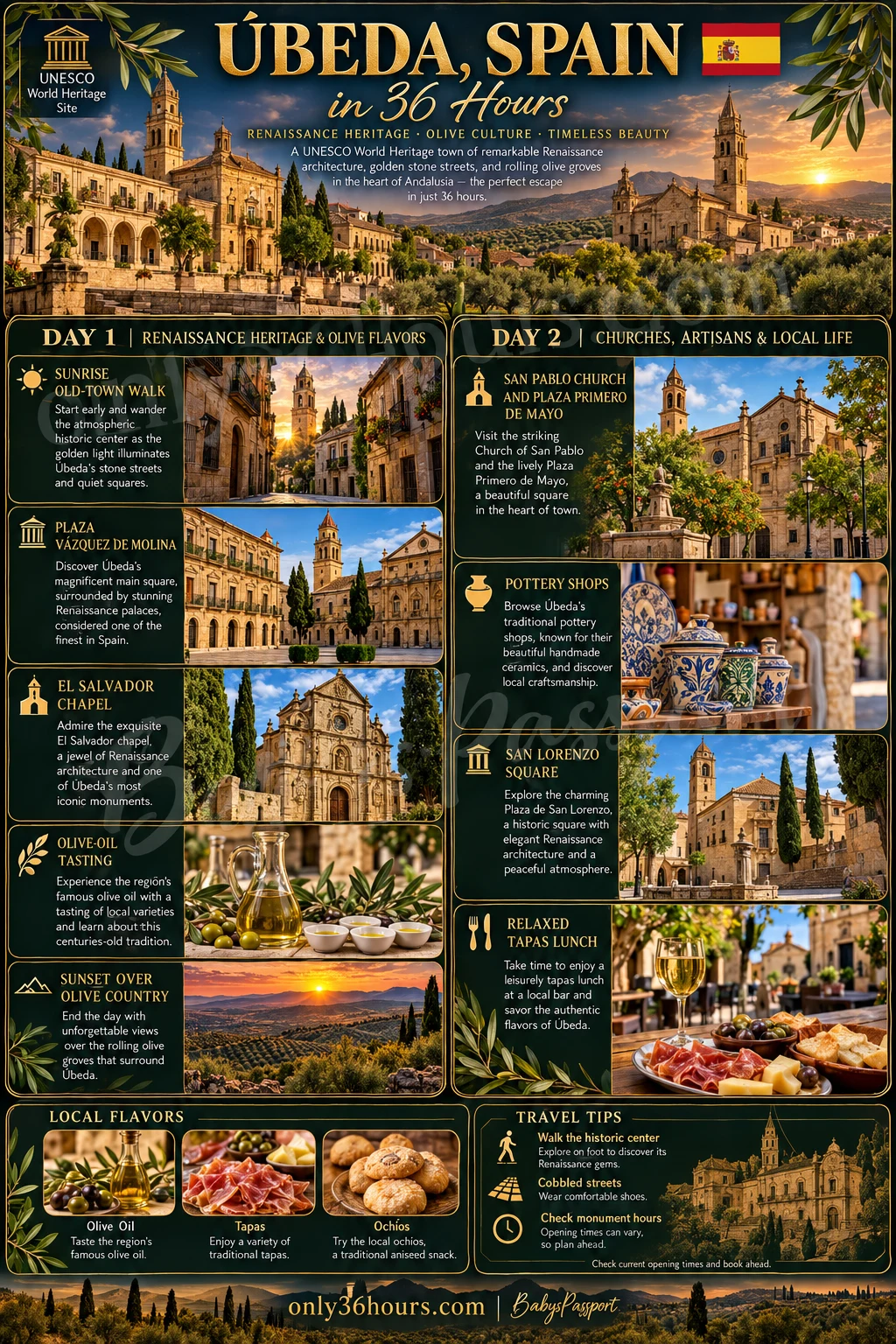
09:00–11:30 | Breakfast and the Renaissance city
Start with toast and local extra-virgin olive oil, then walk from Plaza de Andalucía towards Plaza Vázquez de Molina. Stop at the tourist office for the current monument sheet: the publicly available PDF checked for this guide was dated May 2026, so its detailed hours should not be treated as a permanent calendar. Municipal tourism information.
The monumental square deserves at least an hour, with time to look at each façade from more than one position. The Palacio Vázquez de Molina, also known as the Palacio de las Cadenas, is not a guaranteed interior visit: municipal listings flag restoration restrictions. Enjoy the urban ensemble without assuming every palace has public rooms. A short guided city walk can help connect the patrons and architects, but book a confirmed language and duration rather than joining an unidentified group.
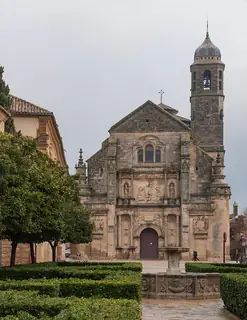
12:00–13:00 | Sacra Capilla del Salvador
Make El Salvador the morning’s main paid interior. Its funerary purpose explains the relationship between the nave, domed space and elaborate decoration. Look closely at the entrance and sacristy rather than racing through with an audio guide playing in the background. The chapel is a major work of the Spanish Renaissance, associated with Francisco de los Cobos and the architects Diego de Siloé and Andrés de Vandelvira. Official monument account.
A noon slot avoids the Sunday late-opening problem shown on the tourism office’s published schedule, but confirm current access before buying. Weekday split opening, last-admission rules, ceremonies and seasonal changes all matter. Allow around 45–60 minutes. Families can focus on a few carved animals and figures; younger children need not listen to every commentary. Tourism office’s dated monument schedule.
13:30–17:00 | Lunch and the Spanish afternoon pause
Have a substantial lunch near the centre. Look for local olive oil, seasonal vegetables, stews or small plates, checking portions before ordering several dishes. Ask a bakery about ochíos, a local bread speciality, and choose fillings to suit your appetite. Do not assume every tapas order is complimentary or that all dishes are vegetarian because vegetables appear in the name.
Use the hottest part of the afternoon for rest. In summer, exposed stone squares can be punishing, and many small businesses close for a midday break. A hotel close enough to return to easily is more useful than an ambitious cross-town schedule.
17:00–19:00 | Olive landscapes and quieter streets
Walk behind the El Salvador area towards the Santa Lucía viewpoints. The olive-filled valley explains why oil belongs at the centre of the visit. Stay on public paths and behind barriers; the panorama does not require leaving the paved route. Municipal viewpoint guide.
If temperatures and daylight permit, continue through the older streets towards San Lorenzo, allowing 20–30 minutes with pauses. Otherwise return for a café. In winter, move this viewpoint block earlier, before darkness and evening cold.
20:00–21:30 | Dinner close to your base
Book dinner on busy weekends and during local festivals. Spanish dining can begin later than young children prefer, so verify an earlier kitchen opening if that matters. Choose a relaxed meal rather than a late drive into the surrounding countryside.
Day 2
09:30–11:00 | The archaeology behind the façades
Visit the Archaeological Museum in the Casa Mudéjar on Calle Cervantes. Its intimate setting provides a different perspective from the grand Renaissance square. Allow about an hour, then stop for coffee rather than immediately adding another religious interior.
The regional authority lists Tuesday–Sunday opening, with Mondays normally closed and specified holiday exceptions. Summer hours finish at 15:00; during the rest of the year Tuesday–Saturday hours are longer, while Sundays and holidays still finish at 15:00. This morning slot avoids those early closing times. If Day 2 is Monday, move the museum to Day 1 morning and shorten the initial square walk. Regional museum operator.
Ask about accessible rooms and the route through the historic building before committing to the full visit. Keep the family visit selective: one interesting object can be more memorable than ten cases viewed in a hurry.
11:30–13:30 | Understanding the olive harvest
Walk roughly 10–15 minutes to the Centro de Interpretación Olivar y Aceite on Corredera de San Fernando. Explore the interpretation, or reserve an oil-tasting workshop in advance. The provincial tourism listing gives morning opening Tuesday–Sunday and Monday closure, with afternoon hours varying by season. Workshops have separate times and languages; confirm your place, particularly if requesting English or bringing children. Provincial tourism’s practical listing.
If both the museum and oil centre fall on Monday, shifting one to Day 1 may be enough. There is no need to compress both: buy oil from a specialist shop and retain a leisurely morning instead.
13:30–18:00 | Lunch, rest and the pottery quarter
After lunch and a break, head towards Calle Valencia and the pottery district, allowing 15–25 minutes from the centre depending on your starting point. Arrange a workshop visit if watching production matters: an open shop does not guarantee a potter is demonstrating. Handle ceramics only with permission and ask how fragile purchases can be packed. Municipal craft-route information.
The Hospital de Santiago is another important landmark, but restoration has affected access during 2026. Add an interior only after the tourist office confirms reopening; do not rely on an older guide’s unconditional recommendation. End with an early supper and one last central-square circuit.
Three quieter worthwhile places
- Miradores de Santa Lucía: a compact landscape pause close to El Salvador.
- Miradores de San Lorenzo: a public edge-of-town walk overlooking the olive country.
- Jardines de la Cava: a green break useful with children, connected to the San Lorenzo area.
The municipal monumental route links these places. Spring and autumn favour longer walks; summer requires shade and a genuine midday rest, while winter evenings can be cold. Let that seasonal rhythm shape the visit.
Sources & travel planning
Research checked 2026-10-16. This date describes the guide’s research, not a guarantee of current conditions. Opening hours, prices, access, transport and travel advice can change. Recheck the official sources before booking and departure. Walking and journey times are planning estimates.
- turismodeubeda.com ↗
- turismodeubeda.com ↗
- turismodeubeda.com ↗
- turismodeubeda.com ↗
- juntadeandalucia.es ↗
- jaenparaisointerior.es ↗
- turismodeubeda.com ↗
- turismodeubeda.com ↗
Found a change? Contact Only36Hours about a correction.