36 Hours in Ulm: The Minster, Waterways and a City Across the Danube
Verified: 16 October 2026. Check live operator notices before booking, particularly for the Minster tower and museums undergoing building work.
Ulm is more than a spectacular church spire. Its old working quarter follows the little River Blau towards the Danube, while a short bridge crossing takes you into Neu-Ulm and Bavaria. Give the two riverbanks a day and a half, with one museum about the unexpectedly wide subject of bread and another afternoon left for gardens or a genuinely hands-on family attraction. The compact centre makes walking practical; the tower climb remains optional.
Two current limitations matter. Museum Ulm's main building is closed for reconstruction. The Lion Man's temporary display at Kunsthalle Weishaupt ended on 4 October 2026; its planned return to the new archaeological display is towards the end of 2026. Do not build an October visit around seeing it without a newly confirmed reopening. The Minster also has partial nave restrictions and limited tower access. Museum Ulm's current information; Minster visitor information.
Getting settled
Choose accommodation between the main station, Münsterplatz and the river for easy access to this route. Allow around 10–20 minutes on foot from the station to central sights, with another 10–20 minutes for many cross-river journeys. The Fishermen's Quarter has rough cobbles, and small bridges create extra manoeuvring with a pushchair or wheelchair. Do not judge the whole route by its short map distances. The city specifically flags the quarter's uneven paving. Municipal walking and access information.
For longer legs, use the current DING journey planner and city fare information. No car is needed for the main itinerary. DING transport and tickets.
Day 1: Church, old trades and the river
09:00–10:00 | Breakfast and Münsterplatz
Begin with a bakery breakfast, then walk around Münsterplatz to appreciate the scale of the church against the surrounding city. In winter, the regular church opening is 10:00, so this outdoor-first start avoids waiting at a locked door. The operator currently defines its winter calendar as 15 October–March, not simply November onwards. Services and special events take precedence over sightseeing.
10:00–12:00 | Inside the Minster, with an optional climb
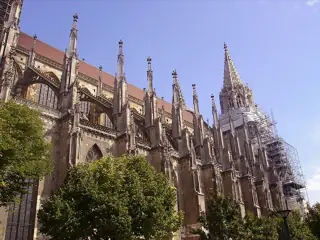
Spend about 45–60 minutes looking at the accessible parts of the church. Focus on its craftsmanship and the long collective effort behind the building rather than assuming every aisle is open during restoration. It is still an active place of worship; children can look for animals or details in the carvings while keeping voices low.
If everyone is comfortable with stairs and heights, ask at the Minster Shop about that day's tower access before buying. Current notices allow ascent only as far as the second platform, around 102 metres, rather than the usual highest viewing level. The first platform's view is substantially obstructed, ice can close the upper available section, and published second-platform times differ between tourism and operator pages. Confirm the final ascent time locally instead of relying on a narrow late-afternoon window. This is not a lift-accessible viewpoint; adults with small children should consider splitting up or skipping the climb. Allow roughly an hour for an unhurried ascent and descent, depending on the available level and queues. Live tower restrictions.
12:15–14:00 | Lunch in the Fishermen's Quarter
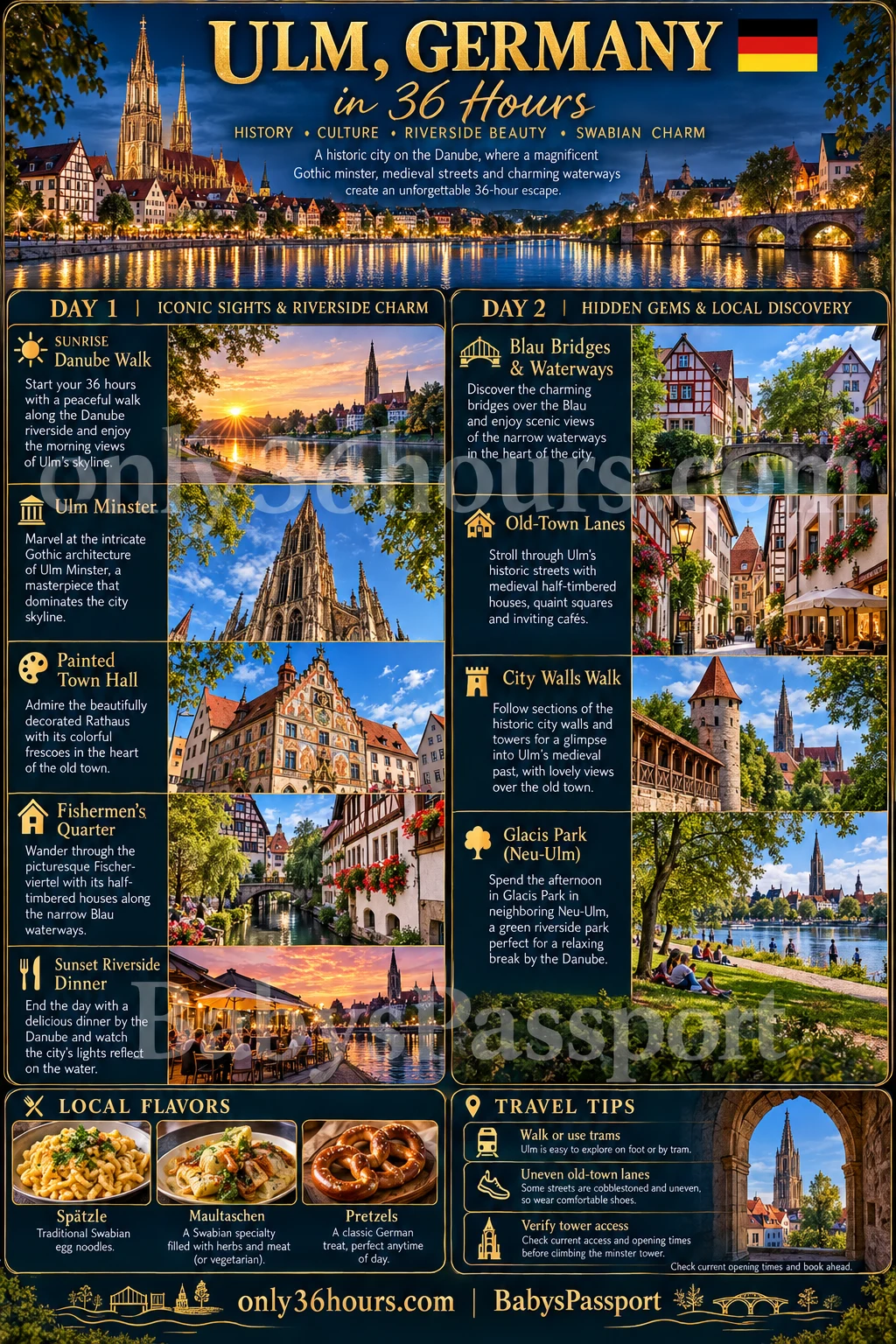
Walk south through the centre towards the Blau, taking time around the historic town hall exterior before reaching the Fishermen's Quarter. The crooked houses and waterside lanes are attractive, but their history is one of fishing, tanning and water-powered trades. The famous Schiefes Haus is a working hotel: admire it from public space rather than treating the interior as an open monument. Official quarter guide.
For lunch, look for a Swabian menu: Maultaschen, the filled pasta parcels, or cheese Spätzle make a satisfying introduction. Ask whether the filling or broth contains meat if ordering for vegetarians. Reserve for a busy weekend rather than assuming the prettiest terrace will have space. City food and restaurant information.
14:00–17:30 | Slow river time
Follow the public riverside paths and city-wall area, watching for cyclists and keeping children close beside water. Pause in the Rosengarten rather than attempting to walk every kilometre of the Danube frontage. Its appeal is strongest when plants are in season, but the river setting works outside flowering months too. Leave room for coffee and a hotel break before dinner.
If rain makes the outdoor afternoon unattractive, move tomorrow's Bread and Art visit here, provided you can arrive comfortably before closing. Monday is the important exception: it closes at 15:00, so use a morning slot instead. An indoor substitution should replace the walk, not turn the day into a race.
18:00–20:00 | A relaxed dinner
Eat in the centre or return to the quarter for a reserved table.
Day 2: Bread, then Neu-Ulm
10:00–12:00 | Museum Bread and Art
The Museum Brot und Kunst connects food, history, culture and art; it is not simply a bakery demonstration. Plan 90 minutes to two hours and choose a few themes to discuss rather than reading every label. Its media guide includes several languages and a children's version; ask about the language available for that children's content. The building is largely accessible.
The regular schedule is daily from 10:00, with Monday closing at 15:00, Wednesday at 19:00 and other days at 17:00. Named closures include Christmas Eve, Christmas Day, New Year's Eve, Shrove Tuesday, Good Friday and Schwörmontag. Check special activities separately: a normal admission ticket does not guarantee a baking workshop. Museum visitor information.
12:15–16:30 | Lunch and a choice across the river
Have lunch before crossing to Neu-Ulm. For families who want another indoor activity, reserve the children's museum at the Edwin Scharff Museum in place of a long park afternoon. Weekday opening starts at 13:00; weekends normally start at 10:00, and Monday is closed. The German operator page includes Tuesday opening, although an older English section conflicts.
Timed reservations are required on Wednesdays, weekends, holidays and during school holidays; booking ahead is sensible on other busy days too. Children up to 14 need an adult, and the operator limits admission to three children per adult. Choose the slot first and fit lunch around it. Current German visitor page; Family supervision rules.
Three quieter places worth choosing
- Ulm Rosengarten: A small riverfront pause between the Herdbrücke and Gänstorbrücke, easily folded into Day 1. Municipal details.
- Neu-Ulm's Glacis-Park: Former fortification land turned into green space. It suits the Day 2 crossing; summer events can make it lively rather than quiet, so consult the programme. City park information.
- Friedrichsau: A larger park with paths and play opportunities, best used instead of the Neu-Ulm museum, not added afterwards. Allow roughly 35–50 minutes to walk from the central riverfront, or use public transport. Municipal park guide.
Return for luggage and an early supper before departure. During festivals, Christmas markets or summer events, book accommodation earlier and expect the central squares to feel considerably busier than this gentle route suggests.
Sources & travel planning
Research checked 2026-10-16. This date describes the guide’s research, not a guarantee of current conditions. Opening hours, prices, access, transport and travel advice can change. Recheck the official sources before booking and departure. Walking and journey times are planning estimates.
- museumulm.de ↗
- ulmer-muenster.de ↗
- ulm.de ↗
- ding.eu ↗
- tourismus.ulm.de ↗
- ulm.de ↗
- museumbrotundkunst.de ↗
- edwinscharffmuseum.de ↗
- edwinscharffmuseum.de ↗
- ulm.de ↗
- nu.neu-ulm.de ↗
- ulm.de ↗
Found a change? Contact Only36Hours about a correction.