36 Hours in Valdivia: River Markets, Rainforest Trees and Niebla's Fort
Verified: 16 October 2026. Recheck weather, coastal warnings and museum calendars before setting out.
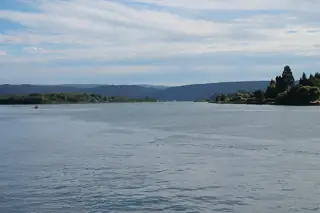
Valdivia's identity is inseparable from water: rivers shape the centre, rain keeps its gardens green, and the coast lies close enough for a half-day excursion. A satisfying short stay pairs the market and university gardens with one coastal fort, leaving room for seafood and a leisurely café stop. Trying to add Corral, Oncol Park and a long river cruise would turn that pleasant introduction into a transport exercise.
Base yourself near the central riverfront or the eastern side of Isla Teja. Walking between the market, Pedro de Valdivia Bridge and the island's cultural area is practical; allow roughly 15–25 minutes between clusters, longer with children. Pichoy Airport is about 32 kilometres from town, so allow approximately 35–55 minutes by prearranged transfer, plus airport formalities. National tourism arrival information.
Choose the days before booking
The Niebla fort's current dedicated visitor page lists Tuesday–Saturday, 10:00–17:00, March–December, and Tuesday–Sunday, 10:00–18:00, in January–February. Some older official pages give broader Sunday opening; use the specific seasonal visitor page and confirm any exception. If your second day is Sunday outside summer, move the coast to Saturday and do the city on Sunday. Monday is not a reliable fort day. Named holiday closures include 1 January, 1 May, 17–19 September, 24–25 December and 31 December. Fort visitor information.
Day 1: The working river and Isla Teja
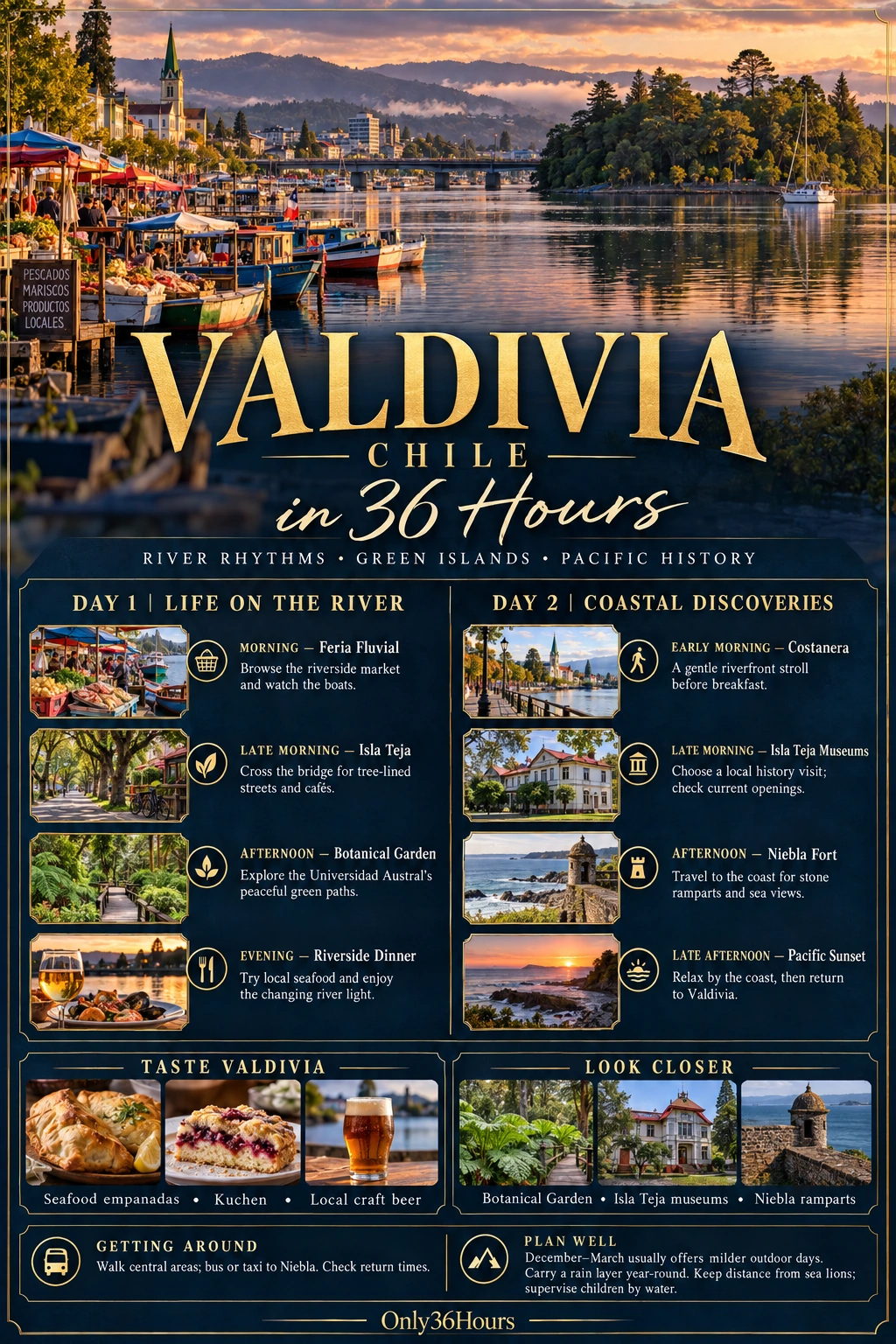
09:00–11:00 | Breakfast and the Feria Fluvial
After breakfast, visit the riverside market while it is part of the working morning rather than just a photo stop. Look at the fish, vegetables and produce, making room for shoppers and deliveries. The adjoining riverfront gives a clear sense of the city's waterways. Official Valdivia overview.
Sea lions may be visible, but they are wild animals, not market mascots to approach or feed. Stay well back, keep children beside you and never place yourself between an animal and the water. Sernapesca explicitly advises against approaching, disturbing or feeding marine wildlife. Wildlife authority guidance.
11:00–13:00 | Cross to the historical museum
Walk across Pedro de Valdivia Bridge to Isla Teja and the Museo Histórico y Antropológico Maurice van de Maele. Allow about 60–90 minutes for an introduction to regional history in the former Anwandter house. Keep the region's Indigenous history in view alongside the better-known European immigration story rather than reducing Valdivia to a German-themed town.
The university's published March–December schedule is Tuesday–Sunday, 10:00–13:00 and 14:00–18:00; its summer schedule is broader. The lunchtime break matters for this route. Reconfirm the day's access, especially around university holidays, and ask about stairs or accessible arrangements before arrival. If it is closed, use the island walk and keep the garden as the day's main visit. University museum information.
13:00–15:00 | Lunch on Isla Teja
Have a seated lunch before continuing towards the university campus. Cooked fish, seafood soup or a vegetable dish makes a sensible choice according to appetite. Ask about shellfish ingredients in broths and shared cooking surfaces if relevant.
Adults can sample a local beer with dinner, but a brewery tour is not necessary to enjoy the city. If driving to the coast tomorrow, keep the driving plan separate from any tasting. National tourism's food and brewery context.
15:00–17:30 | University botanical garden
Continue to the Universidad Austral botanical garden, allowing roughly 15–25 minutes from the cultural museum area. Take 60–90 minutes to follow a manageable selection of paths among native and introduced plants. The university describes collections including Valdivian forest plants and Chilean conifers: this is a good place to notice leaves, bark and habitat rather than hurry to a distant viewpoint.
The current university page lists 09:00–19:00, with a voluntary contribution. Guided group visits need arrangements; do not assume a guide will be waiting. Wet roots and paths can be slippery, and storm conditions may change access. With a pushchair, ask which paths are easiest and turn back before the outing becomes muddy or tiring. Garden operator.
18:00–20:00 | Dinner and a short river walk
Return to your base for a break and dinner. If weather permits, make a brief riverside stroll on established, well-used paths. Rain is normal travel weather here, but heavy rain or strong wind is a reason to shorten the walk, not something to endure for an itinerary's sake.
Day 2: Niebla without rushing the coast
09:00–12:00 | Travel to the fort
Leave after breakfast for Niebla, around 17–18 kilometres from central Valdivia. Allow roughly 30–50 minutes by car in ordinary conditions, or 45–70 minutes including waits and stops by local bus; summer traffic can add time. National tourism identifies local Line 20, but check the current departure point and return service locally. Official Niebla transport information.
Arrive for the fort's 10:00 opening and allow 90 minutes to two hours. Read the site interpretation as well as looking at the cannons and estuary. Admission is currently free without advance individual registration, but group arrangements are separate. Stay on visitor routes and keep children away from edges; wet exposed surfaces and coastal wind can change how comfortable the visit feels. Ask staff about the best route for mobility needs rather than assuming every historic surface is accessible. Fort access and calendar.
12:00–15:30 | Coastal lunch and return
Have lunch in Niebla, using the Feria Costumbrista if it is operating that day or a local restaurant instead. Do not make an out-of-season food-stall opening essential to the plan. A short look at the beach is enough; this guide does not recommend swimming or imply that surf conditions are safe. Return to Valdivia early enough for a café stop and luggage collection. Leave the Corral ferry for a longer stay rather than adding another timetable and weather dependency.
Three quieter places to consider
- Botanical garden's less-busy planted sections: Choose a shorter side loop on open, maintained paths instead of extending the trip into distant forest trails. University garden.
- The Isla Teja cultural museum area: Return to the public grounds around the historical museum for a calm pause during opening hours. Another museum is optional, not an obligation. University cultural-campus description.
- Parque Saval: An alternative green-space outing on Isla Teja if its current gates and event programme suit your visit. Festivals can make it busy, and maintenance can change access; check locally instead of relying on old published hours. Municipal park activity information.
Carry waterproof layers even in summer. At the coast, identify evacuation signs: SENAPRED advises immediate movement to a designated safe area if an earthquake makes standing difficult. Follow official alerts, stay away from river mouths during a tsunami evacuation, and return only when authorities permit. Official earthquake guidance; Tsunami guidance.
Sources & travel planning
Research checked 2026-10-16. This date describes the guide’s research, not a guarantee of current conditions. Opening hours, prices, access, transport and travel advice can change. Recheck the official sources before booking and departure. Walking and journey times are planning estimates.
- chile.travel ↗
- castillodeniebla.gob.cl ↗
- chile.travel ↗
- sernapesca.cl ↗
- museodigital.uach.cl ↗
- ciencias.uach.cl ↗
- chile.travel ↗
- diario.uach.cl ↗
- munivaldivia.cl ↗
- senapred.gov.cl ↗
- senapred.gov.cl ↗
Found a change? Contact Only36Hours about a correction.