36 Hours in Viterbo: Papal Rooms and Medieval Neighbourhoods
Verified: 16 October 2026. Confirm operator calendars and any temporary restrictions before travel. Transfer times are planning estimates.
Viterbo is a rewarding place to slow down after Rome. Its centre is built around grey stone, fountains, exterior staircases and the memory of a period when papal government operated here. Give the Papal Palace one focused visit, then let the surrounding neighbourhoods provide the rest of the first day. A second morning of civic art adds a different perspective without requiring a car or an ambitious tour of the Tuscia countryside.
Stay inside or just outside the walls, checking luggage access before booking. Drivers should ask their accommodation for a legal arrival and parking route rather than follow navigation blindly into restricted streets. Rail travellers should check the precise Viterbo station on their ticket; the city has more than one, and the closest choice depends on the route and accommodation.
Day 1: The papal city and San Pellegrino
09:00–10:00 | Breakfast and Piazza del Plebiscito
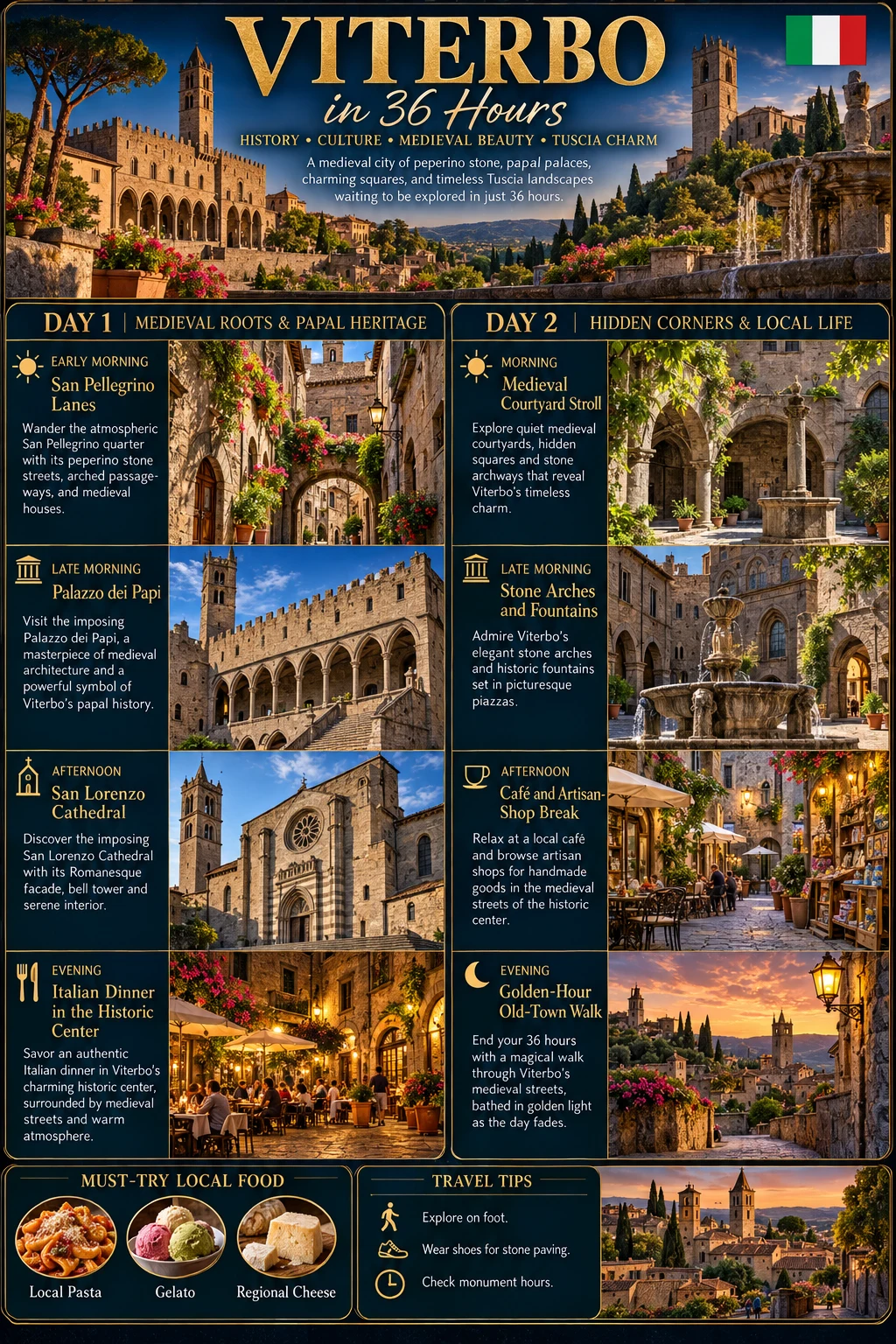
Start with coffee and a pastry, then walk through Piazza del Plebiscito. The civic buildings make a useful introduction before the papal complex. Continue toward Piazza della Morte and Piazza San Lorenzo, allowing approximately 10–15 minutes of walking plus stops. Keep the morning simple: the stone streets already give you plenty to notice.
10:00–12:00 | Palazzo dei Papi and the cathedral complex
Allow a generous block for the Papal Palace, the Colle del Duomo Museum and whichever cathedral spaces are included in your chosen visit. The loggia and conclave hall explain why Viterbo matters in papal history, while the museum and cathedral add art and religious context. Ask where the route begins and what is available that day rather than entering at a door that looks convenient. Municipal description of the palace and visitor route.
Archeoares’s published visitor information lists morning opening from 10:00, with a midday break and seasonally varying afternoon hours. Reconfirm your date and the last visit, especially for guided arrangements or holidays. Cathedral worship takes priority, and some spaces depend on the organised route. The itinerary does not require access to every room. Operator information and diocesan explanation of the complex.
Families can ask about the operator’s children’s interpretation materials. A few engaging details will usually work better than a long sequence of dates. Anyone with limited mobility should discuss the precise palace and cathedral route before purchasing; historic staircases and thresholds cannot be assessed from a general ticket description. Operator’s family-learning information.
12:15–14:00 | Lunch with Tuscia flavours
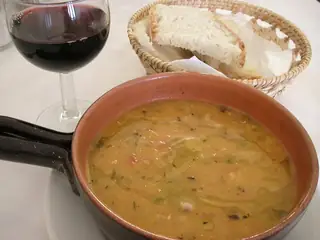
Choose a nearby trattoria and leave enough time to enjoy lunch. Acquacotta, associated with the Maremma and Tuscia, is a good regional dish to look for: a rustic soup whose ingredients vary with the cook and season. Ask about added egg, fish or other ingredients if you follow a particular diet. A simple pasta dish or vegetables with local bread may suit a lighter appetite. Lazio’s official description of acquacotta.
There is no need to order a full sequence of courses. With children, ask about sharing or a small pasta portion rather than assuming a separate children’s menu exists. Save room for a later café stop.
14:15–16:00 | San Pellegrino on foot
Explore Via San Pellegrino and its adjoining lanes, looking for the exterior staircases known as profferli. The buildings, arches and small changes in level are the main attraction. Walk slowly enough to notice how houses relate to courtyards and public space, but do not enter private stairs or doorways for a photograph.
The regional tourism board identifies San Pellegrino as one of Viterbo’s defining medieval districts. This is a neighbourhood to explore, not a single monument with an entrance time. Keep your route compact in summer heat, and be especially careful on wet paving. VisitLazio’s city introduction.
16:00–18:00 | A quieter square and a rest
Return through Piazza della Morte for coffee, or continue a little farther into Pianoscarano if everyone still wants to walk. Allow approximately 15–25 minutes for a modest detour and retrace your route if slopes become tiring. Do not turn this into a march to every gate in the city walls. Later, pause at the accommodation before dinner.
19:30 onward | Dinner in the old town
Reserve for a weekend evening and choose somewhere close enough to walk home. Regional cooking and a local wine, if you drink alcohol, make a satisfying end to the day. If you prefer an early family meal, confirm the kitchen’s starting time; an open bar does not necessarily mean dinner is already being served.
Day 2: Civic rooms and close looking
10:00–12:00 | Palazzo dei Priori and Museo dei Portici
Return to Piazza del Plebiscito for the civic rooms and the Museo dei Portici. This provides a useful contrast with the papal visit: spend time with the painting displays and the decorated rooms rather than rushing through to another museum. Audioguides are available on request, and accompanied visits can be booked separately.
The operator lists weekday sessions 10:00–13:00 and 15:00–19:00 April–October, with continuous weekend opening; November–March afternoons end at 18:00. Tuesday closure is specified in its winter section. Confirm Tuesday access for your particular season rather than generalising from summer. Last admission is one hour before closing. If your winter second day is Tuesday, visit these rooms on Monday morning and move the papal complex to Tuesday. Museum’s visitor information.
The same source gives a genuinely useful access detail: the ground floor is wheelchair-accessible, and a lift for the Piano Nobile is reached from Via Ascenzi 1. Ask staff to explain the route before setting out. Tactile and audiovisual interpretation accompanies the Sebastiano del Piombo works. These provisions do not automatically establish accessibility at the separate Papal Palace.
12:15–15:30 | Lunch and a final fountain walk
Have lunch, then take a short loop toward Piazza Fontana Grande if you want one more outdoor stop. Keep this period flexible for shopping, coffee or simply returning to a favourite square. Collect luggage with a comfortable margin for your station or coach departure. Depending on the station and accommodation, a final walk may take roughly 15–30 minutes; use a taxi if luggage and paving make that unrealistic.
Three quieter worthwhile places
- Piazza della Morte: a smaller pause between the main civic and papal areas, quieter outside tour-group arrivals.
- Pianoscarano’s lanes: a residential extension of the medieval walk; respect homes and keep voices low.
- Piazza Fontana Grande: a fountain-centred stop that fits a short final loop rather than requiring a separate excursion.
Practical planning
Viterbo’s compact centre still has slopes, irregular paving and steps. The municipality’s accessibility planning identifies obstacles on routes between Piazza della Morte and Fontana Grande, so wheelchair users should request current local guidance rather than assume an uninterrupted smooth path. Municipal route assessment.
Bring water and use indoor time during hot afternoons. In rain, shorten the lane walks. Thermal bathing is a separate optional outing, not included in this schedule: check the chosen facility’s current opening, child rules and health guidance before substituting it for a half-day. You do not need to combine baths, villas and archaeological sites to make a first Viterbo visit worthwhile.
Sources & travel planning
Research checked 2026-10-16. This date describes the guide’s research, not a guarantee of current conditions. Opening hours, prices, access, transport and travel advice can change. Recheck the official sources before booking and departure. Walking and journey times are planning estimates.
- comune.viterbo.it ↗
- archeoares.it ↗
- diocesiviterbo.it ↗
- archeoares.it ↗
- visitlazio.com ↗
- visitlazio.com ↗
- museodeiportici.it ↗
- comune.viterbo.it ↗
Found a change? Contact Only36Hours about a correction.