36 Hours in Vitoria-Gasteiz: Medieval Streets and Wetland Space
Verified: 16 October 2026. Confirm guided-tour availability and seasonal calendars. Transfer times are estimates.
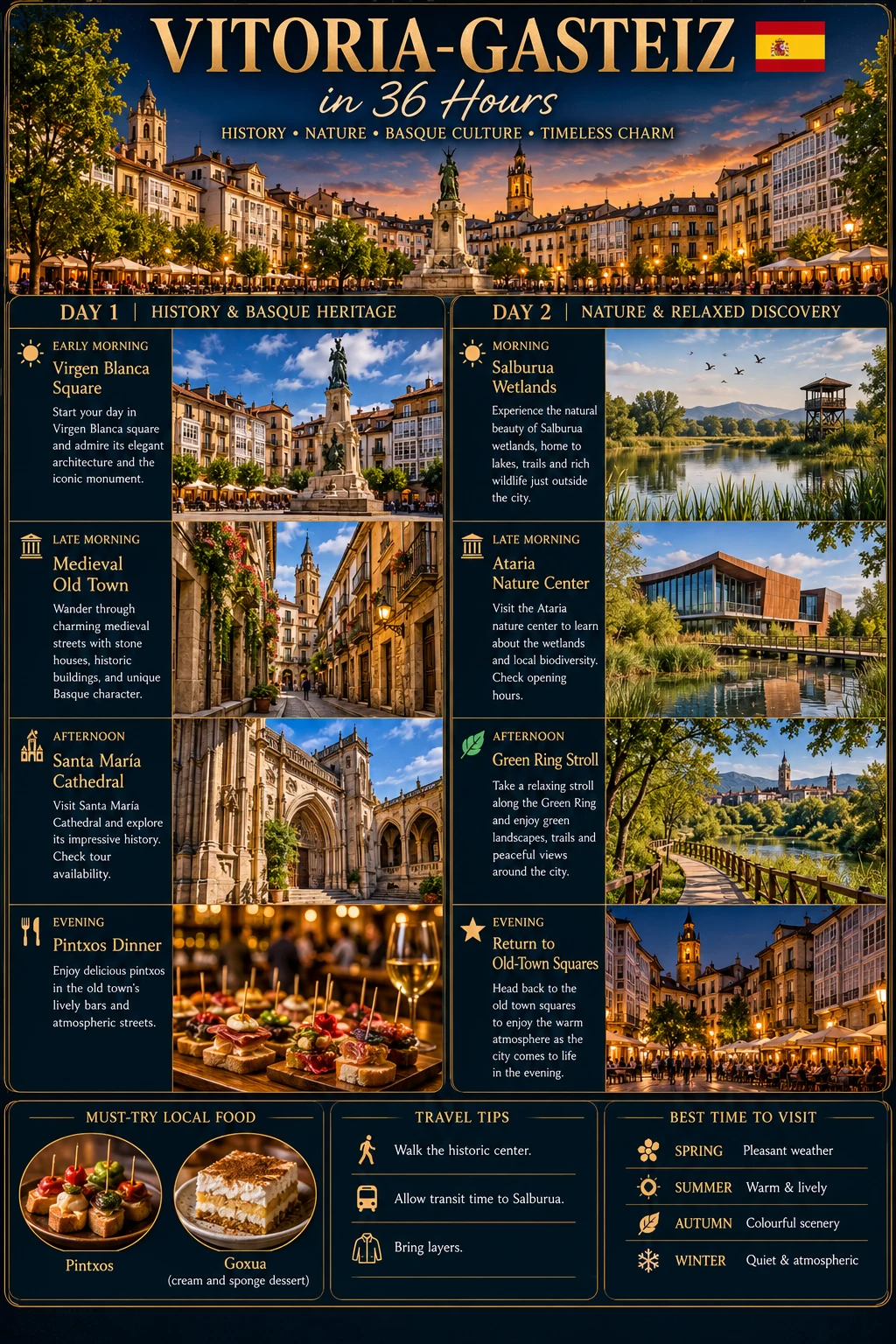
Vitoria-Gasteiz combines a compact hilltop old town with an unusually easy escape into green space. Its appeal is not a race between monuments: spend one day moving between the medieval streets, food and contemporary art, then give the next morning to Salburua’s wetlands. Stay centrally and you can do most of the first day on foot, saving a bus or taxi for the nature outing.
The old town’s almond-shaped street pattern makes a satisfying walking route, but it also means slopes. Visitors with mobility needs should plan a practical approach to the upper streets and confirm current lift or ramp options locally rather than assume every picturesque shortcut is step-free. Municipal medieval-quarter route.
Day 1: The medieval hill and a contemporary afternoon
09:00–10:15 | Breakfast and the central squares
Begin around Plaza de la Virgen Blanca and Plaza de España, then walk uphill at an easy pace. Look at the relationship between the newer centre and the old streets before committing to a detailed route. A café stop and a few exterior views are enough; leave room for the booked cathedral visit rather than filling every minute beforehand.
10:30–12:00 | Santa María Cathedral by guided visit
Book a cathedral tour in your preferred language and build the morning around the actual confirmed time. Santa María’s visitor programme explains the building through its fabric and restoration, with a route that can include areas you would not normally enter independently. The standard cathedral visit lasts about sixty minutes; tower and other combinations are separate choices. Allow another half-hour for arrival and leaving the visitor centre.
The operator says same-day bookings cannot be made through the website and directs visitors to telephone instead. Works or cultural activity can also affect a tour. Check the meeting point at Cantón de Santa María 3 rather than waiting at an assumed main entrance. Cathedral’s official booking and visit information.
Families should consider whether an hour of guided interpretation suits their children and ask about a family-oriented option. Discuss mobility, stroller needs and sensitivity to enclosed spaces with the booking team before selecting a route. The tower is optional; there is no need to choose the longest visit simply because it is offered.
12:15–14:00 | Pintxos for lunch
Return through the old town for a small selection of pintxos. Choose two nearby places at most, or sit down in one if travelling with children or anyone who finds standing at a bar tiring. Ask what is freshly prepared and order a manageable amount before deciding whether you want more.
A tortilla portion or a vegetable-based bite can be approachable, but check ingredients: fish, meat, dairy and mayonnaise may not be obvious from appearance. A glass of Rioja Alavesa wine or a non-alcoholic drink makes the stop complete without turning lunch into a tasting marathon. Basque tourism’s guide to old-town pintxos.
14:00–16:30 | Rest and a short street-art walk
Use the early afternoon for a hotel break, a café or a modest loop through the medieval streets. This is deliberately not an immediate museum appointment: Artium closes between its weekday sessions. Look at a few murals or façades as you pass, without entering residential courtyards or assuming every cultural building is open.
If you prefer gardens, La Florida is a pleasant alternative closer to the newer centre. Keep this as a pause rather than a second major route. Official Basque tourism’s city suggestions include the park and medieval quarter.
17:00–18:30 | Artium Museoa
Walk approximately 10–20 minutes from the central squares, depending on your starting point, to Artium for contemporary art. Select a few rooms or a current exhibition rather than trying to see everything. With children, ask each person to choose one work they would like to discuss; a short engaged visit is more useful than a long exhausted one.
The museum lists Tuesday–Friday 11:00–14:00 and 17:00–20:00, with continuous 11:00–20:00 opening at weekends and public holidays. Non-holiday Mondays are closed. The ticket office closes thirty minutes before closing and galleries begin clearing fifteen minutes before. It also offers wheelchairs and prams on request at the cloakroom. Artium’s practical information.
On Monday, move Artium to the next open day only if it fits your departure; otherwise keep the garden-and-café alternative. Do not sacrifice the whole second morning merely to complete a checklist.
20:00 onward | A seated dinner
Choose a restaurant serving a full meal after the lighter lunch. Book ahead on weekends, and confirm an earlier kitchen opening if children need dinner sooner. Keep the evening around the centre so that the return to your accommodation is straightforward.
Day 2: Salburua without a forced dawn start
09:30–10:45 | Breakfast and transfer
Have breakfast, then head toward the Salburua wetlands and Ataria. Allow roughly 25–45 minutes by bus with waiting and the final walk, or about 10–20 minutes by taxi from the centre. The city’s current visitor page identifies bus line 3 toward Portal de Bergara, with a stop at Portal de Zurbano/Biosfera and a five-minute walk to Ataria. Check the live service before setting out. Municipal Ataria transport and hours.
11:00–13:00 | Ataria and a short wetland route
Start at the interpretation centre to understand the landscape and ask which short paths or observation points are currently suitable. Then take a manageable walk, allowing time to stop quietly rather than treating wildlife watching as a guaranteed sighting. Bring binoculars if you have them, stay on marked routes and never feed or approach animals.
Ataria’s published morning hours are 11:00–14:00. Afternoon opening is 16:00–19:00 October–April and until 20:00 May–September. Mondays are normally closed; after a public-holiday Monday the closure shifts to Tuesday. There are additional named holiday closures. On a closed-centre day, use only confirmed open park paths with your own route information, or substitute La Florida and a central morning. Do not depend on toilets, advice or indoor shelter being available when Ataria is closed.
For families, keep the outdoor loop short enough to return before hunger or cold takes over. Rain, wind and muddy sections can change its suitability for strollers or wheelchairs; ask about the precise route rather than the park in general.
13:30–16:00 | Return, lunch and departure time
Return to the centre for lunch, then collect luggage or enjoy one last coffee. Avoid attaching a distant winery visit to the afternoon. Your final hours are better used without a transfer that could interfere with a train or coach.
Three quieter worthwhile places
- La Florida: a central garden break away from the busiest old-town bars.
- Plaza del Machete between busy periods: a small atmospheric pause within the medieval route.
- Salburua’s designated observation points: quieter when approached patiently, with wildlife and other visitors given space.
Practical planning
Bring layers even when the city afternoon feels warm; exposed wetland paths can be cooler. Reserve the cathedral first, then arrange the rest around it. Keep the weekday Artium lunch closure in mind, and verify each holiday separately. Most city-centre walking legs are short, but slopes and paving deserve extra time. A well-paced two-day visit can include both culture and nature without hiring a car.
Sources & travel planning
Research checked 2026-10-16. This date describes the guide’s research, not a guarantee of current conditions. Opening hours, prices, access, transport and travel advice can change. Recheck the official sources before booking and departure. Walking and journey times are planning estimates.
- vitoria-gasteiz.org ↗
- catedralvitoria.eus ↗
- euskadi.eus ↗
- tourism.euskadi.eus ↗
- artium.eus ↗
- vitoria-gasteiz.org ↗
Found a change? Contact Only36Hours about a correction.