36 Hours in Willemstad: Harbour Colours, Living History and Beach Time
Verified: 18 October 2026.
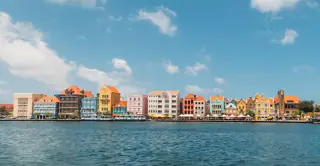
Willemstad’s waterfront is immediately memorable, but its colours are only the beginning. Behind Handelskade lie neighbourhoods shaped by maritime trade, colonial rule, enslavement and the lives of people from Africa, Europe and the wider Caribbean. UNESCO’s description of the historic city and harbour explains why Punda, Otrobanda, Pietermaai and Scharloo belong in the same story. The working waterway still gives the city its rhythm.
Use this itinerary for a morning-to-following-evening stay of roughly 36 hours, including one night’s sleep. It combines a compact historic core with a separate beach outing. With children, keep the museum visits selective and protect time for shade, food and rest. Suggested timings are planning blocks, not guarantees of access or measured walking times.
Before you arrive
Stay in or near the historic centre if walking to dinner and the waterfront matters most. A beach hotel changes the transport calculation: budget for rides into town rather than imagining Handelskade is beside the sand. For this short visit, a rental car is optional, provided you arrange airport and beach transfers and keep the route compact.
The tourist board’s transport guide lists taxi services and public buses, with terminals in Punda and Otrobanda. Check a specific bus route and timetable before relying on it for a museum appointment. For taxis, confirm the total fare, passenger count, luggage and any child-seat needs before departure. Allow extra time when crossing the harbour, since Queen Emma Bridge opens for ships.
Check museum opening days and last admission, not just closing time. Carry water and sun protection even for short city walks. Historic streets, thresholds and pavements vary, so ask venues about your exact mobility requirements instead of assuming the compact centre is step-free throughout.
Day one: two sides of the harbour
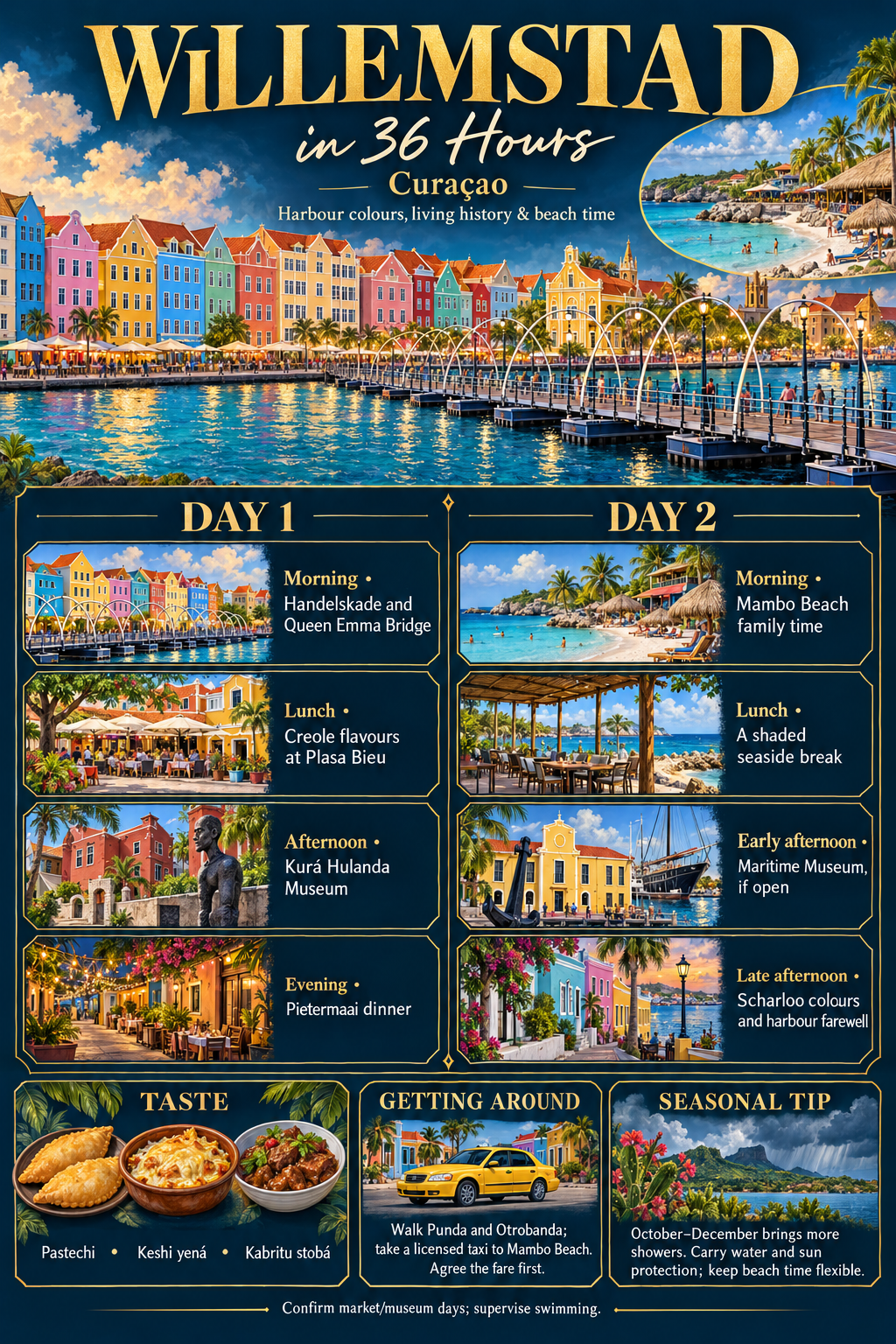
09:00–11:30 | Handelskade, Punda and Queen Emma Bridge
After breakfast, begin on the Otrobanda side for the view across to Handelskade, then cross Queen Emma Bridge when it is open to pedestrians. The tourist board’s bridge account describes its floating construction and swinging operation. Follow barriers and staff directions; watching from a safe place ashore is enough. If a ship movement interrupts your crossing, follow the current local instructions for the ferry or wait without rushing.
In Punda, move away from the waterfront for a short wander through the narrow streets. Compare gables, shutters and shaded shopfronts rather than photographing only one famous row. Stop for a pastechi, a savoury pastry, if breakfast was early. Leave the contents and spice level to an actual conversation with the vendor rather than assuming every version is the same.
11:30–13:00 | An early market lunch
Make for Plasa Bieu, also called Marshe Bieuw or the Old Market, while lunch service is under way. The official food guide describes shared, first-come seating and recommends arriving early. Ask what is available that day. Kabritu stobá is goat stew; keshi yená combines cheese with a meat filling. Neither needs to become a compulsory family order: share a suitable dish and ask about ingredients and allergies.
Keep market aisles clear, ask before photographing people and choose a café if queues or heat become tiring.
13:30–16:00 | Kurá Hulanda Museum and a pause
Cross back to Otrobanda for Kurá Hulanda Museum. Its account of the transatlantic slave trade and Afro-Caribbean heritage adds necessary depth to the morning’s architecture. Adults should help children interpret difficult material about enslavement and violence, choosing sections that match their age and attention.
The museum’s visitor page says ordinary admission does not require prebooking, while private or large-group tours do. Guided interpretation is an optional additional service and depends on availability. On Sundays, last entry is 14:00 and closing is 15:00; holiday schedules differ. Allow about 90 minutes, then take the remaining pause outside in the surrounding village.
17:00–evening | Pietermaai dinner
After a hotel rest, head to Pietermaai for an early dinner. Its former residential streets now contain restaurants, cafés, galleries and small hotels. Nieuwestraat can be lively, so choose an earlier table if your family wants a quieter meal. Reserve a particular restaurant if it is important to the trip; no named venue or performance is essential here.
Arrange the return journey before everyone is tired. Leave time for a full night’s sleep before tomorrow’s beach visit.
Day two: sea air and maritime stories
08:30–12:00 | Mambo Beach, conditions permitting
Take a prearranged ride to Mambo Beach. This is a developed beach strip with restaurants, shops and entertainment, rather than a secluded stretch of coast. Go early for a gentler pace, check current access and chair charges, and choose shade before settling in.
Swimming depends on the conditions you find. Follow local advice, supervise children closely and do not assume sheltered-looking water removes risk. Keep belongings attended and avoid packing a long boat excursion into this short morning. If weather is poor, replace the beach with a slow breakfast and more indoor time; the holiday does not depend on swimming.
12:00–15:00 | Lunch and the Maritime Museum
Return to town early enough for lunch and a visit around 13:00 to the Curaçao Maritime Museum, if its date-specific opening is confirmed. Its nautical charts, ship models and navigation material make a useful bridge between the harbour outside and the island’s wider history. The operator currently describes opening on almost every day, generally until 15:30, so do not leave this until late afternoon.
The same official page expressly says the harbour boat tour is temporarily suspended because no ship is available. This itinerary includes the museum only. Check separately if that situation changes; a general mention of tours elsewhere on the page is not a confirmed sailing.
15:00–21:00 | Scharloo and an easy farewell
If everyone has energy, take a short daylight walk through nearby Scharloo, looking at the larger houses and the different street scale identified in UNESCO’s city account. Stay on public streets and respect homes and working premises. Return for a drink, collect bags and have an early dinner, leaving a generous buffer for an airport transfer or onward departure.
Three quieter places to make room for
- Scharloo’s side streets: a slower architectural walk after the museum, with current local route advice.
- Kurá Hulanda Village: a seated pause around the museum, away from the immediate bridge approach; events may change the atmosphere.
- The Maritime Museum: a focused indoor alternative when waterfront crowds or heat become tiring.
Seasonal and access notes
The tourist board identifies October–December as the wettest months. Keep the beach flexible and retain an indoor option. Kurá Hulanda currently describes wheelchair access through a service entrance and small steps requiring assistance in some exhibition areas; contact it in advance. Plan rests rather than relying on continuous shade, and leave optional walks optional. Willemstad is most rewarding when there is time to connect its food, harbour and difficult history instead of collecting every attraction.
Sources & travel planning
Research checked 2026-10-18. This date describes the guide’s research, not a guarantee of current conditions. Opening hours, prices, access, transport and travel advice can change. Recheck the official sources before booking and departure. Walking and journey times are planning estimates.
- whc.unesco.org ↗
- curacao.com ↗
- curacao.com ↗
- curacao.com ↗
- kurahulandamuseum.com ↗
- kurahulandamuseum.com ↗
- curacao.com ↗
- curacao.com ↗
- curacaomaritime.com ↗
- curacao.com ↗
Found a change? Contact Only36Hours about a correction.